
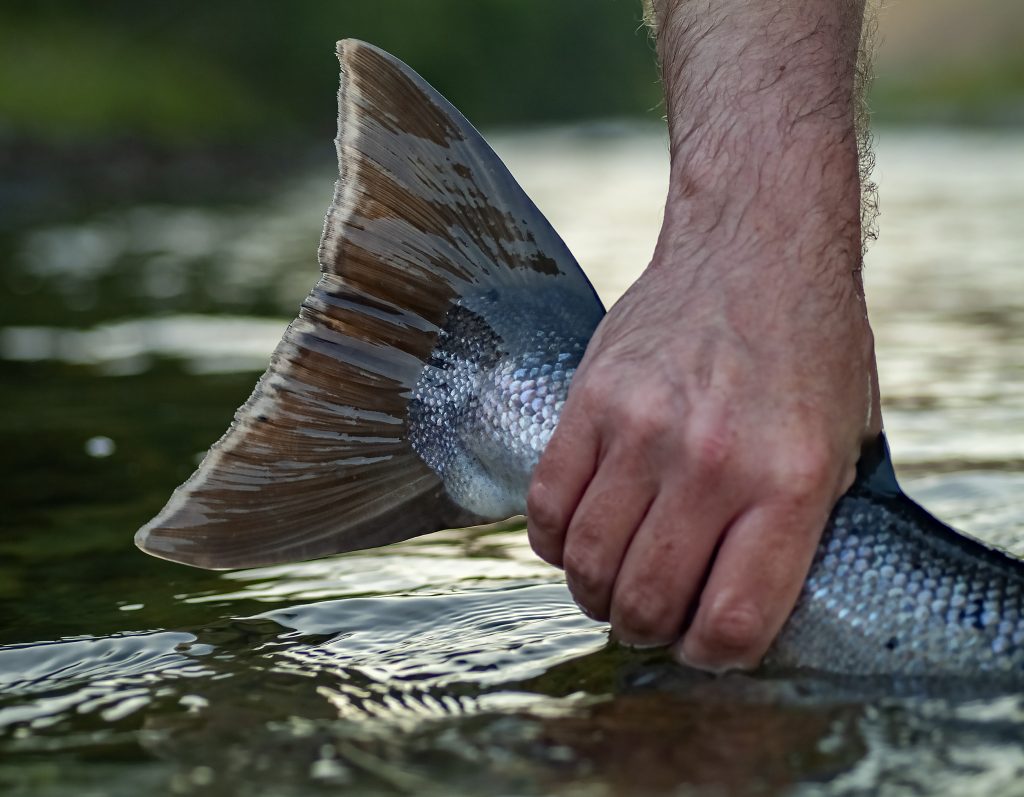
The design and styling of salmon flies have changed significantly over the years. Initially, these flies were made exclusively from feathers and silk, but today they often incorporate various hair materials. Over time, the choice of hair has also evolved. Early hair-wing salmon flies were tied primarily with deer hair, squirrel, and calf tail—all fairly stiff materials. In the 1980s and 1990s, however, Scandinavian fly tiers began favoring softer materials like fox tail and raccoon dog. It was during this period that tying salmon flies on tubes became the norm.
By Håkan Karsnäser
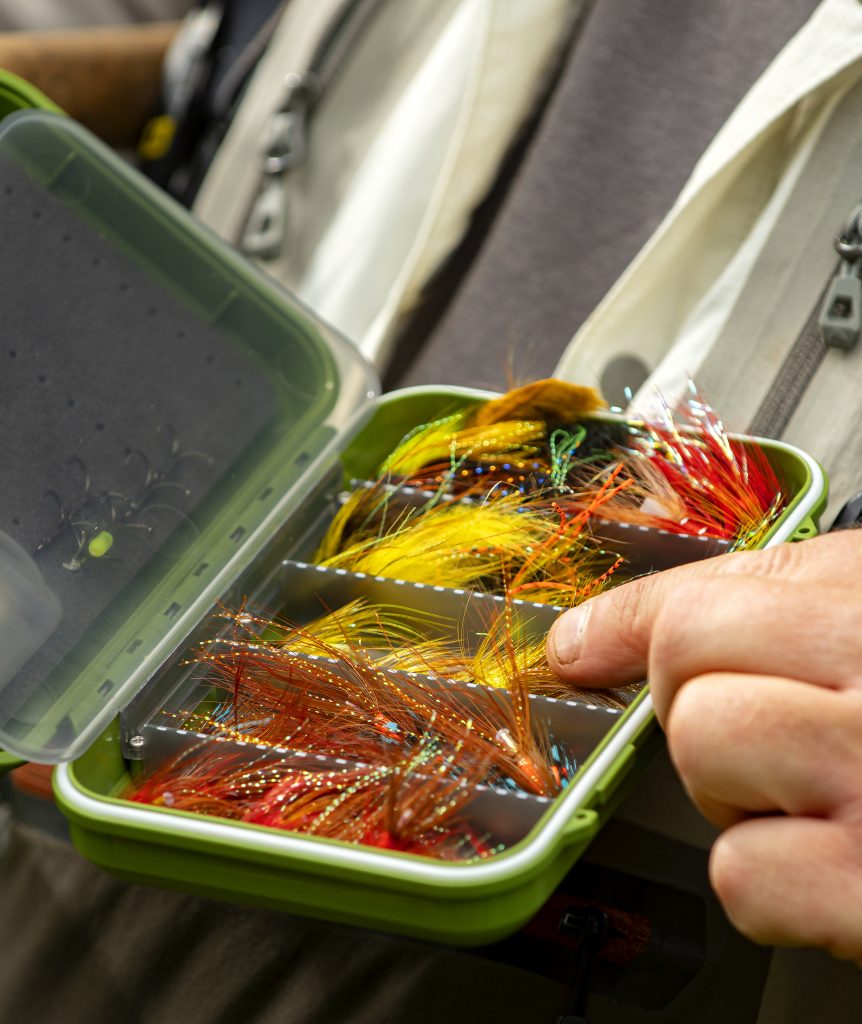
Recently, there has been a partial return to using squirrel and deer tail for hair wings. Particularly popular are the so-called shrimp flies. Characterized by a long tail made of bucktail and crystal flash, a two-toned body, a short wing, and a collar hackle, these flies have become widely recognized. Originating and developed in the British Isles, they have also gained popularity in Sweden.
The History of Shrimp Flies
Few people know that shrimp and grub-style salmon flies were tied as early as the mid-20th century. These flies were designed to mimic shrimp, which explains the name “shrimp flies.” One of the most famous examples is the General Practitioner (GP), tied for the first time in 1953 by Colonel Esmond Drury.
The GP is tied with golden pheasant breast feathers, golden pheasant tippets, polar bear hair, rooster hackle, and a red seal fur body. Because shrimp swim backward, shrimp flies are tied with hair and hackles as tails to imitate shrimp antennae and claws. To replicate the shiny carapace of a shrimp, fly tiers often used two jungle cock feathers as a short wing, forming a roof-like structure over the body. The shiny surface, rather than the color of the feathers, was the primary reason for their use.
Classic Spey flies, with their soft, flowing rooster hackle and mallard wings, are also thought to imitate shrimp. The hackle on Spey flies is tied with the stem facing backward, creating a longer hackle near the bend of the hook and shorter fibers toward the head.
Alastair Gowan’s Contribution
Renowned fly tier and angler Alastair Gowan created several shrimp-style patterns, including the famous Ally’s Shrimp and Cascade. Cascade was inspired by a conversation with a fishing companion who favored synthetic materials. Using a generous amount of silver and pearl crystal flash gifted by his friend, Gowan crafted a fly with a long tail and short wing.
The tail combined orange and yellow bucktail with silver flash, while the body was divided into two sections: silver tinsel and black floss. The wing was made of black squirrel and pearl flash, initially tied on both the top and underside of the hook. Later versions omitted the lower wing, leaving a single wing tied on top. The hackle consisted of yellow and orange rooster feathers, wrapped as a collar.
When Gowan held the completed fly up to the light, the combination of shimmering flash and vibrant hair created a cascade of color, inspiring the name “Cascade.” Unlike Ally’s Shrimp, which is most effective in murky water, Cascade has proven highly effective in clear water and bright sunlight.
Cascade (by Alastair Gowan)
Materials:
- Hook: Ahrex HR420, size 4-8
- Thread: Black 8/0
- Tag: Fine oval silver tinsel
- Tail: Orange and yellow bucktail, Crystal Flash Mirage
- Body: Half silver tinsel, half black floss
- Ribbing: Oval silver tinsel
- Wing: Black squirrel
- Hackle: Yellow and orange rooster
Step-by-Step Instructions
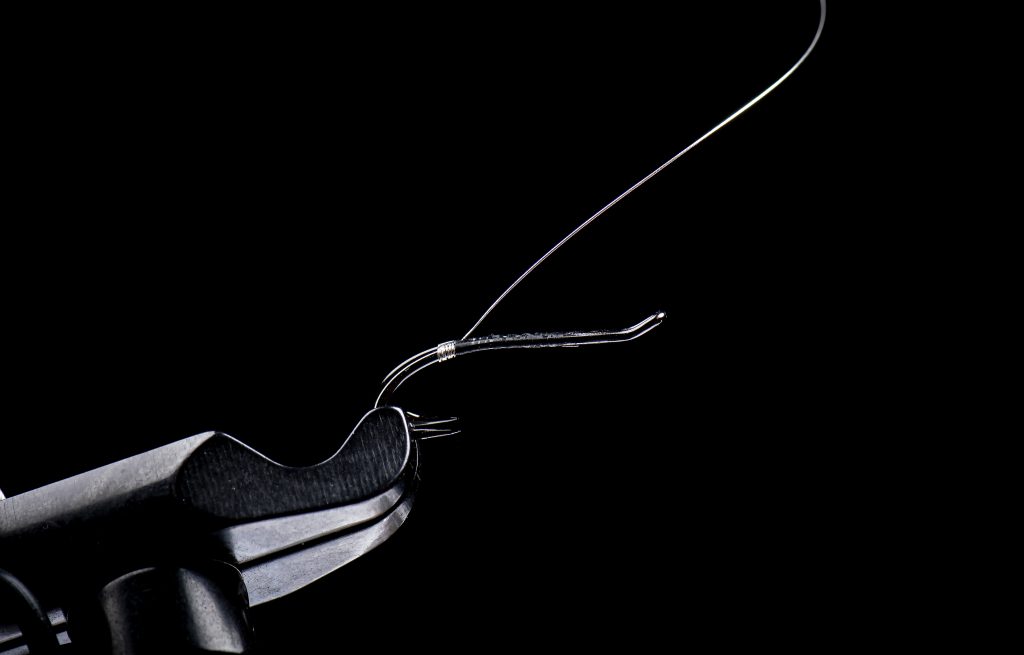
Step 1: Secure the thread to the hook and tie in a piece of fine oval silver tinsel at the barb. Wind the tinsel down into the hook bend for 5-6 turns. Bring the tinsel back between the hook points and over the wound section, securing it firmly.
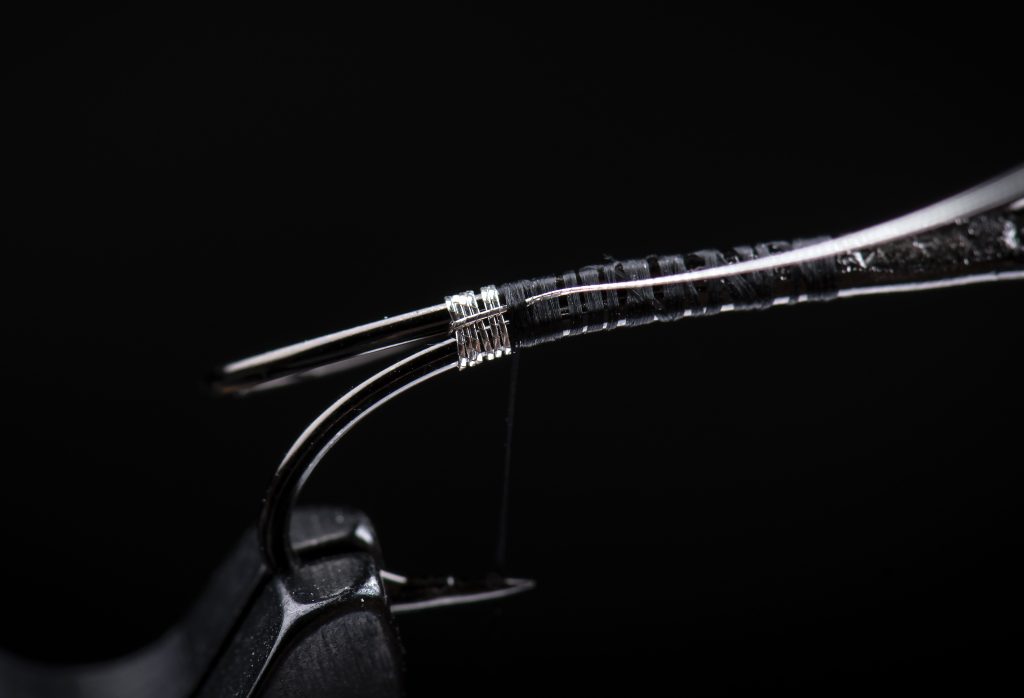
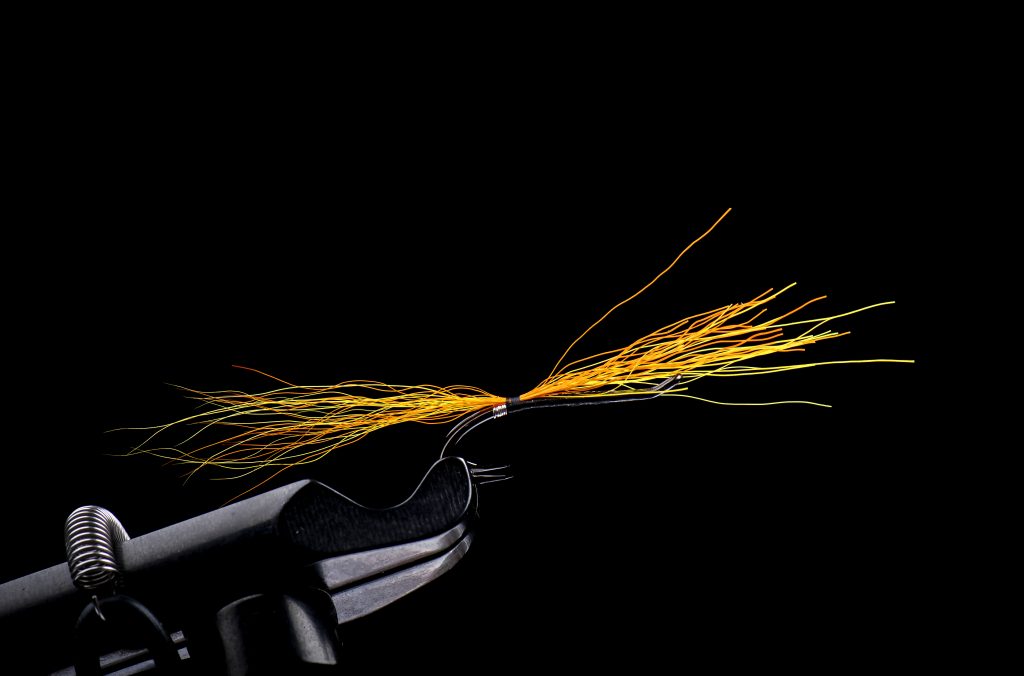
Step 2: Trim a few strands of orange and yellow bucktail and tie them in as the tail, 1-1.5 times the hook shank length. Secure the hair along the shank up to the hook eye.
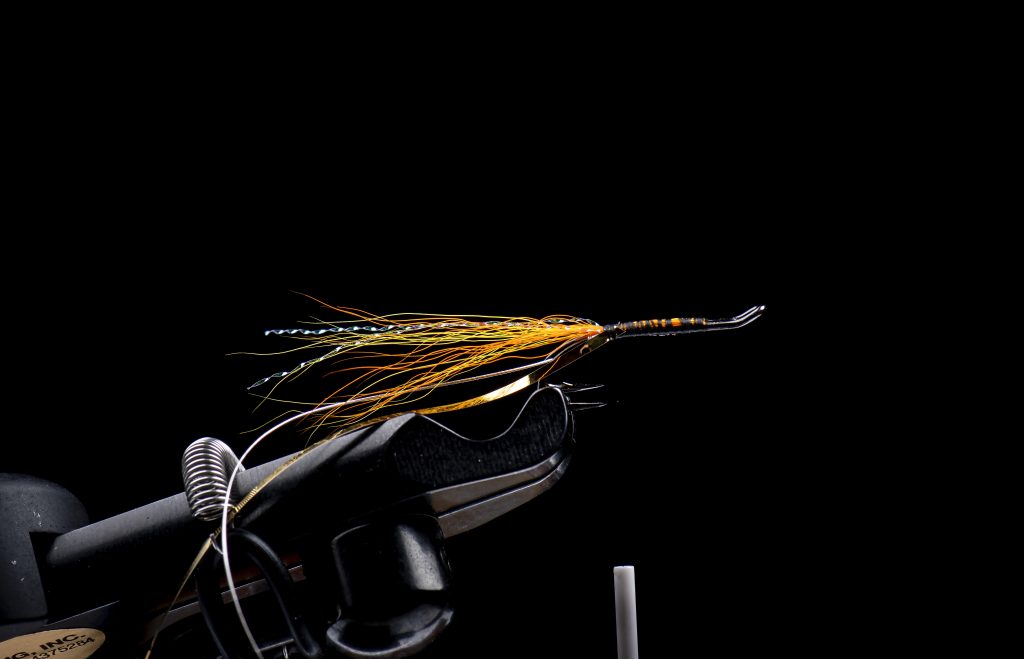
Step 3: Attach a strand of Crystal Flash along one side of the tail. Fold it over to secure it on the opposite side, trimming it to match the tail length. Tie in a piece of oval silver tinsel at the rear and secure it along the shank.
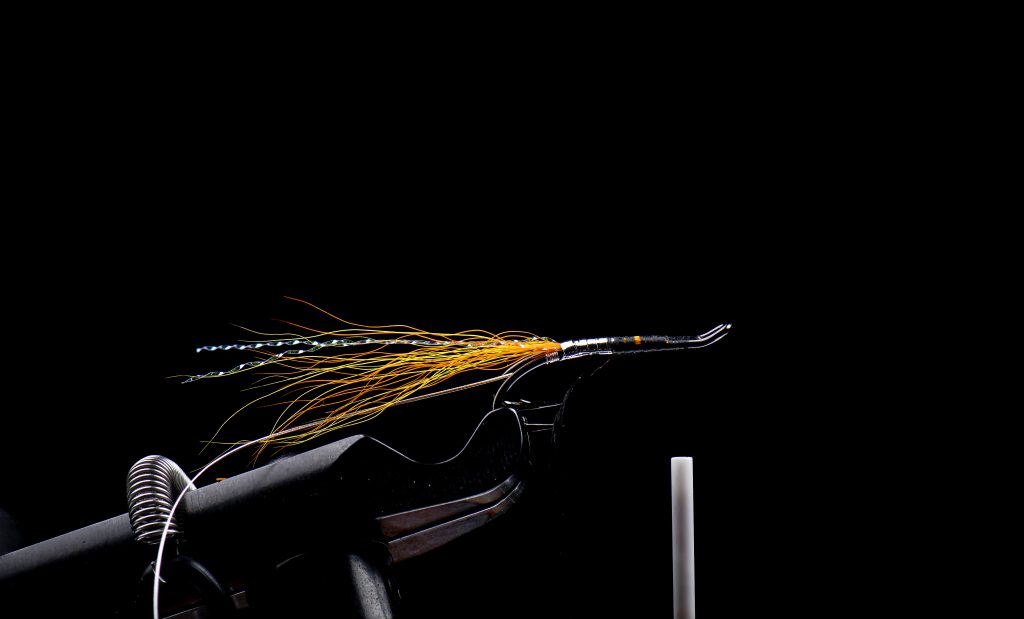
Step 4: Tie in a piece of flat silver tinsel and wind the thread to slightly beyond the halfway point of the shank. Wrap the flat tinsel to cover the rear half of the shank, secure, and trim.
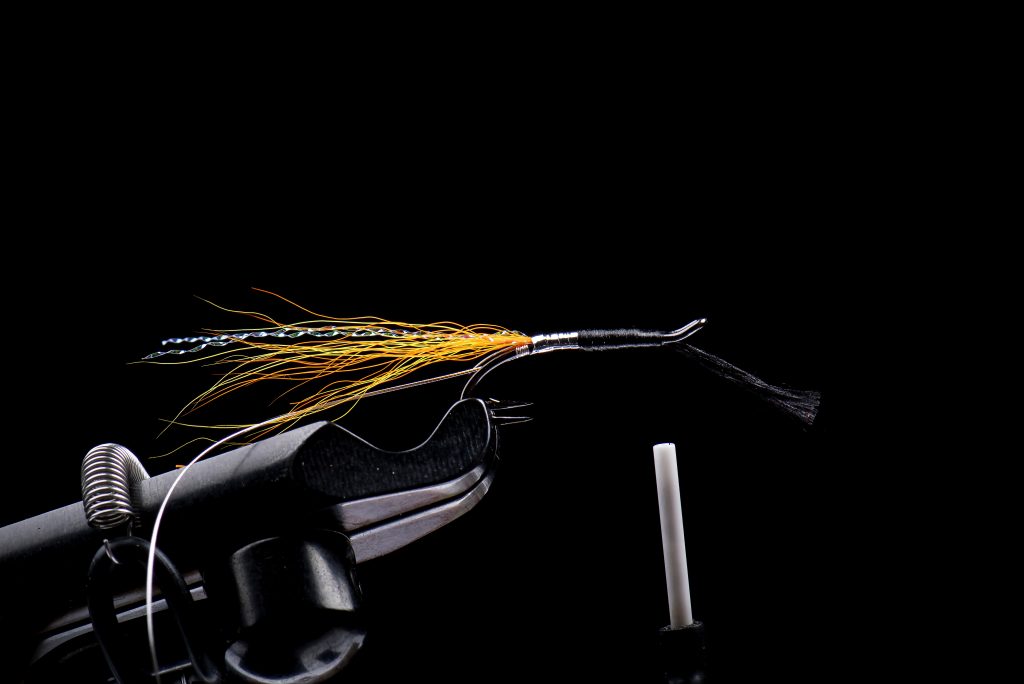
Step 5: Attach a piece of black floss and wind the thread to just behind the hook eye. Wrap the floss forward to create a smooth, even body for the front half. Secure and trim.
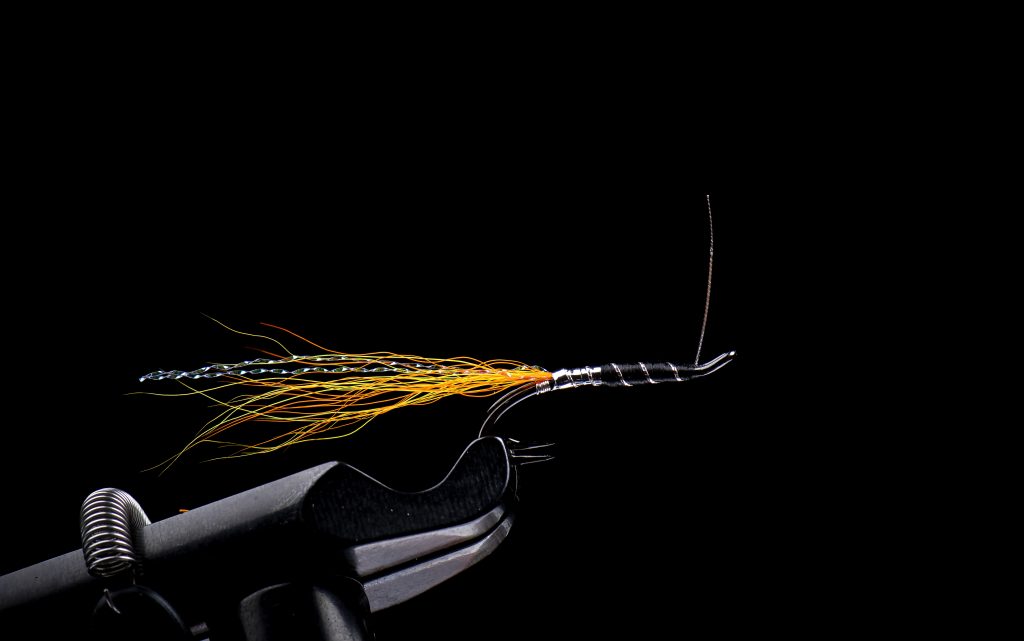
Step 6: Wrap the oval tinsel ribbing in 4-5 even turns along the body. Secure and trim.
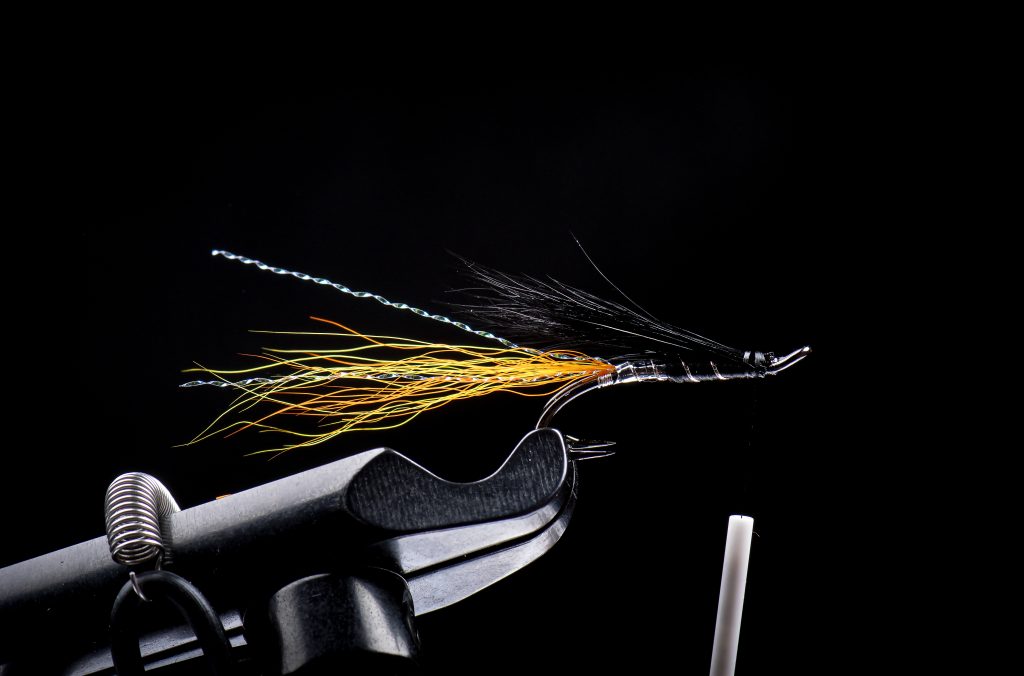
Step 7: Trim a small bundle of black squirrel hair and tie it in as the wing, equal in length to the hook shank.
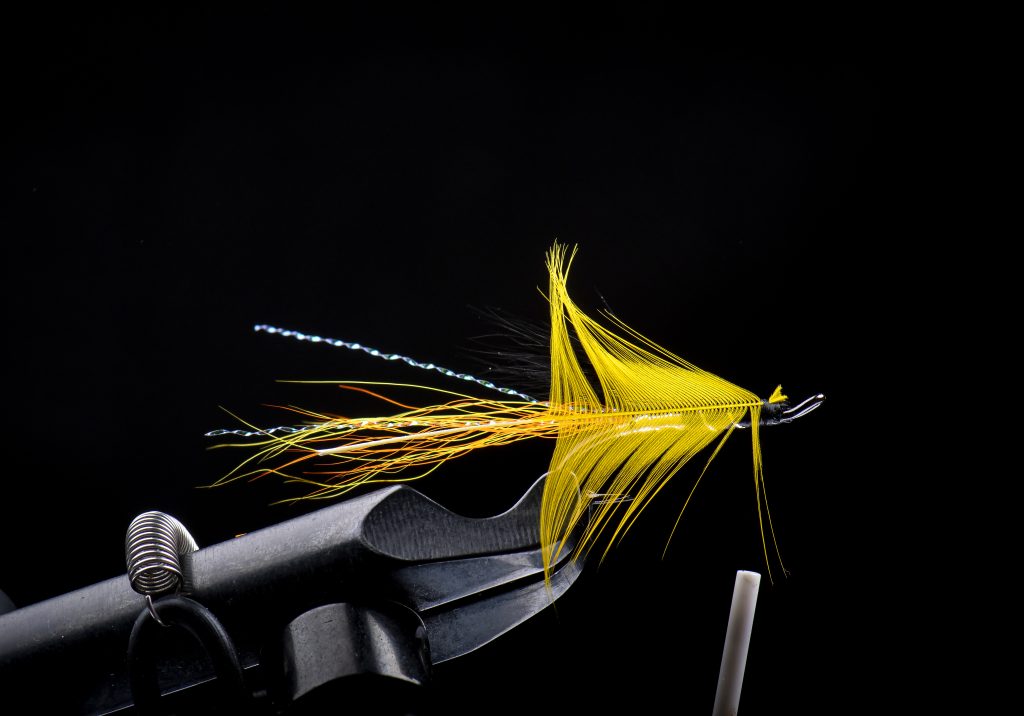
Step 8: Select a yellow rooster hackle with fibers reaching the hook bend. Tie it in by the tip in front of the wing and wrap it 2-3 times. Secure and trim the excess.
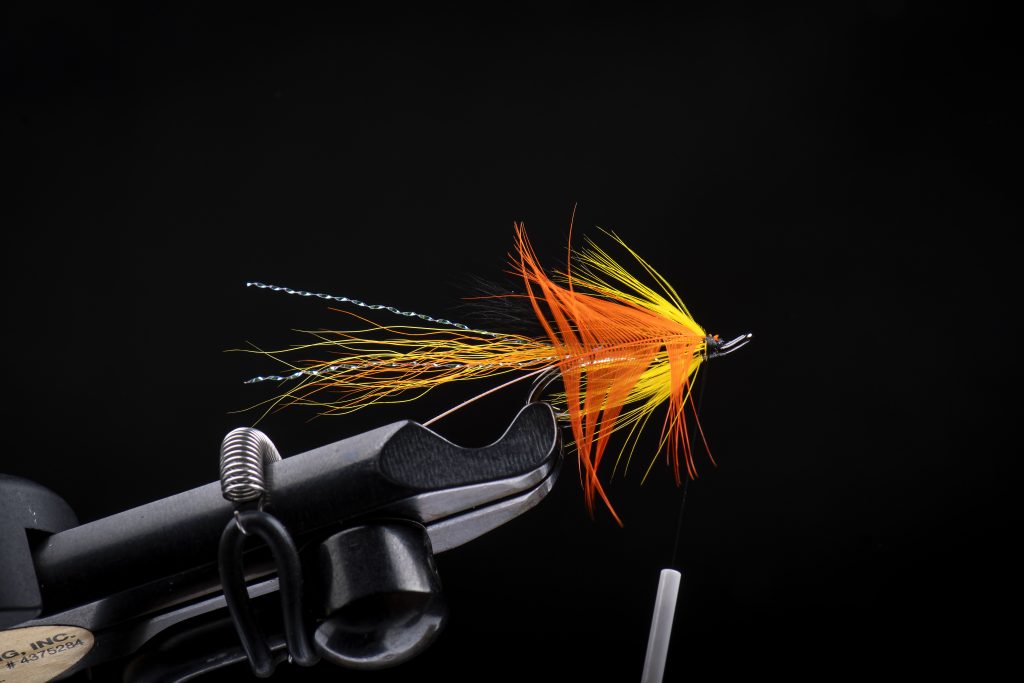
Step 9: Choose an orange rooster hackle with fibers of similar length to the yellow. Tie it in by the tip, in front of the yellow hackle. Wrap it 2-3 times, secure, and trim.
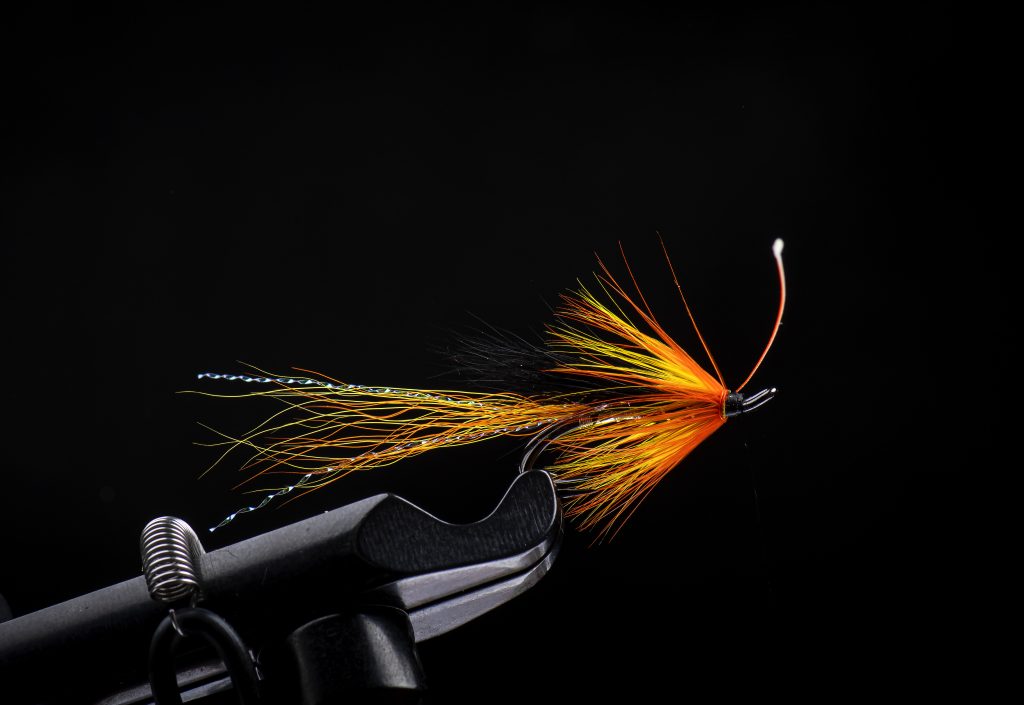
Step 10: Wind the thread to create a small head on the fly. Finish with a whip finish and trim the thread. Coat the head with 2-3 layers of varnish.
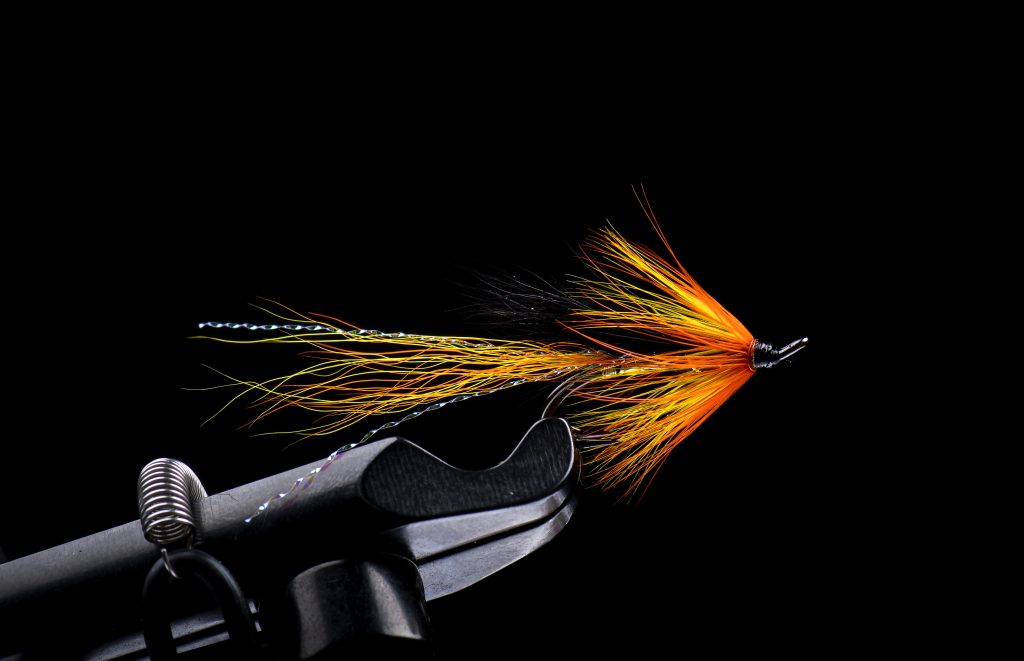
Step 11: The finished fly is ready to fish!
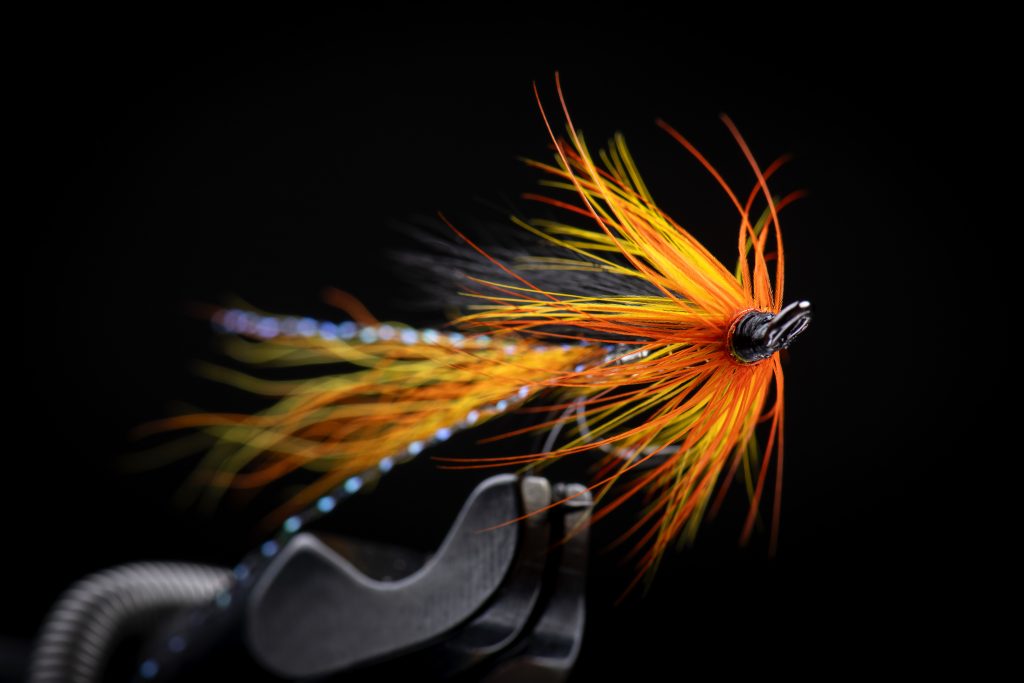
“When Alastair held the finished fly to the light, its glittering flash and vibrant colors created a cascade of brilliance—hence the name Cascade.”