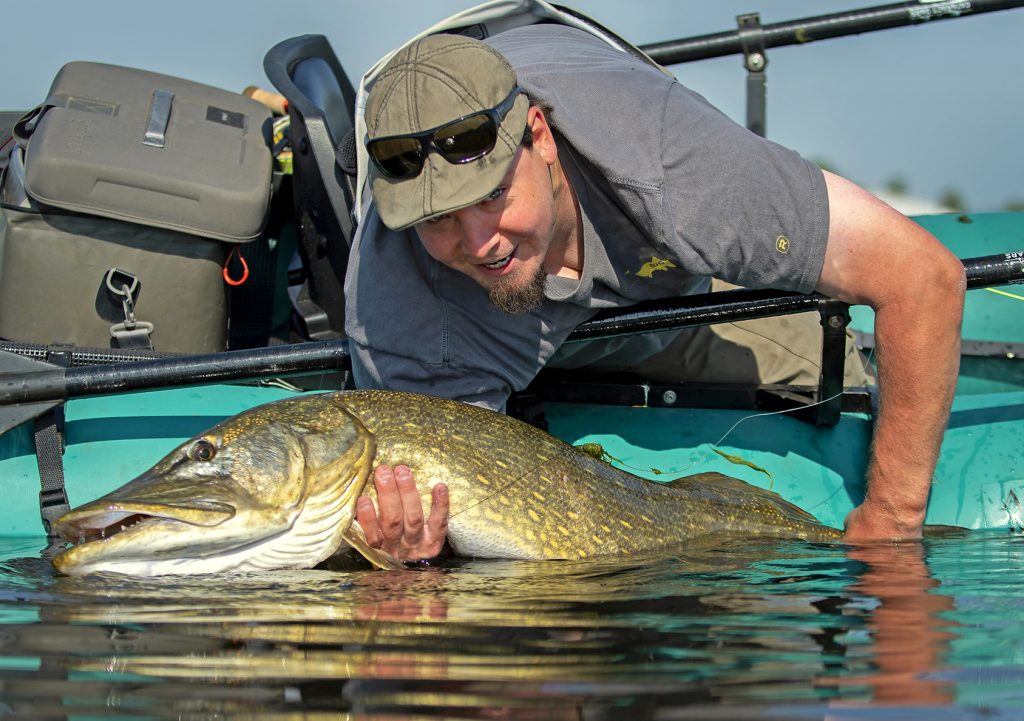
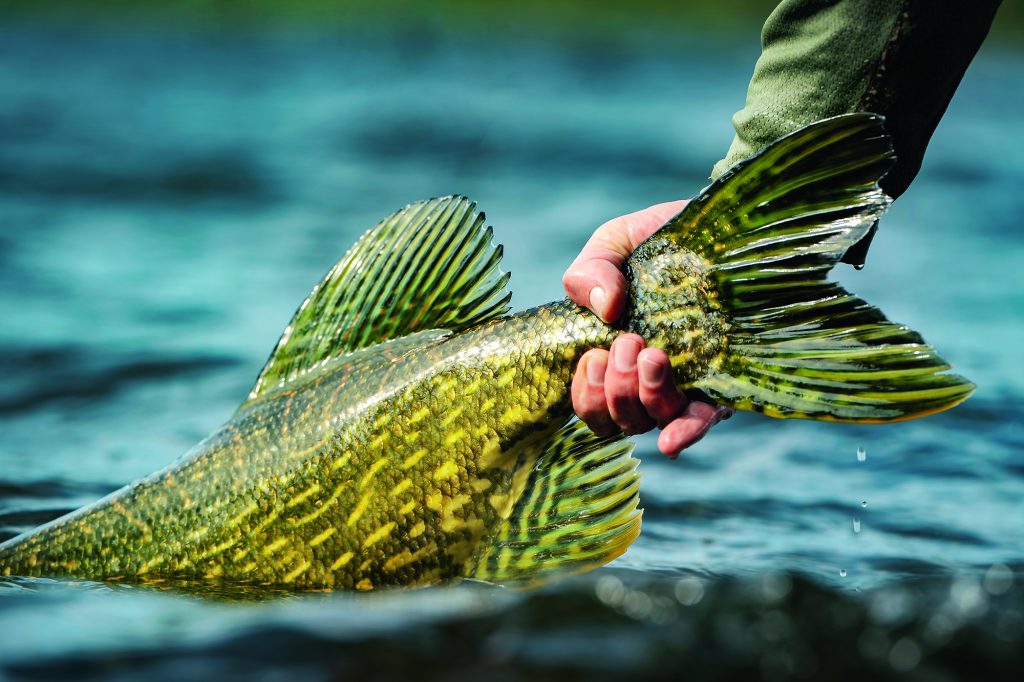
Few moments in fly fishing are as spectacular as the explosive strike of a hungry pike on the water’s surface. As we enter the end season for popper fishing for pike, three popper enthusiasts share why this type of fly is their absolute favorite for pike fishing.
By Peter Lyngby
(this artickle has been published in the danish magazine “Sportsfiskeren” and the online magazine “In The Loop Magazine”)
Czech nymph fishing has become a staple in fly fishing. The technique originated in Eastern Europe, particularly in the Czech Republic, Slovakia, and the Balkan countries. This method involves using long rods, extended leaders, multiple dropper flies, and heavy nymphs. The flies are fished by casting upstream, using only the leader, and allowing the flies to drift naturally with the current. This approach lets the flies sink quickly to the bottom without being dragged upward by the current pulling the line and leader. Anglers keep the rod tip downstream, carefully tracking the leader, and strike at any unusual movement — a tug, tension, or lift — often resulting in a hooked fish.
This technique offers an exciting way to fish, though it has its detractors. Some argue it’s not “true” fly fishing since it involves minimal casting and little use of the fly line. Nonetheless, Czech nymphing is highly effective when fish aren’t feeding on the surface or when fishing fast-flowing waters with deep holes and eddies.
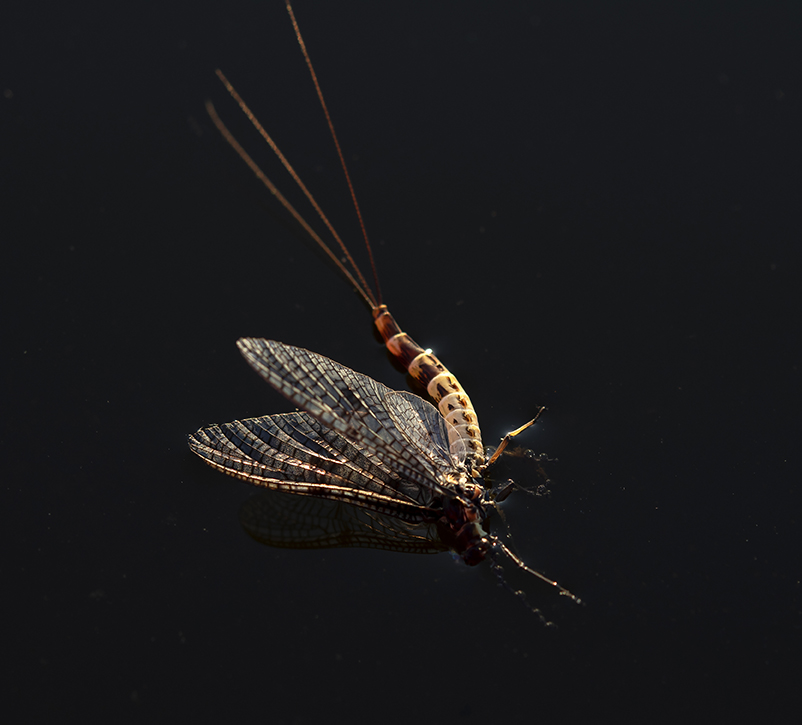
During late spring and early summer, the largest mayflies in our waters, Ephemera danica and Ephemera vulgata, emerge. In English, they are known as mayflies, a term that has become synonymous with all mayfly species, even those that do not hatch during this period. For many fly fishers, a newly emerged mayfly epitomizes fly fishing itself, and it’s easy to understand the fascination with these insects.
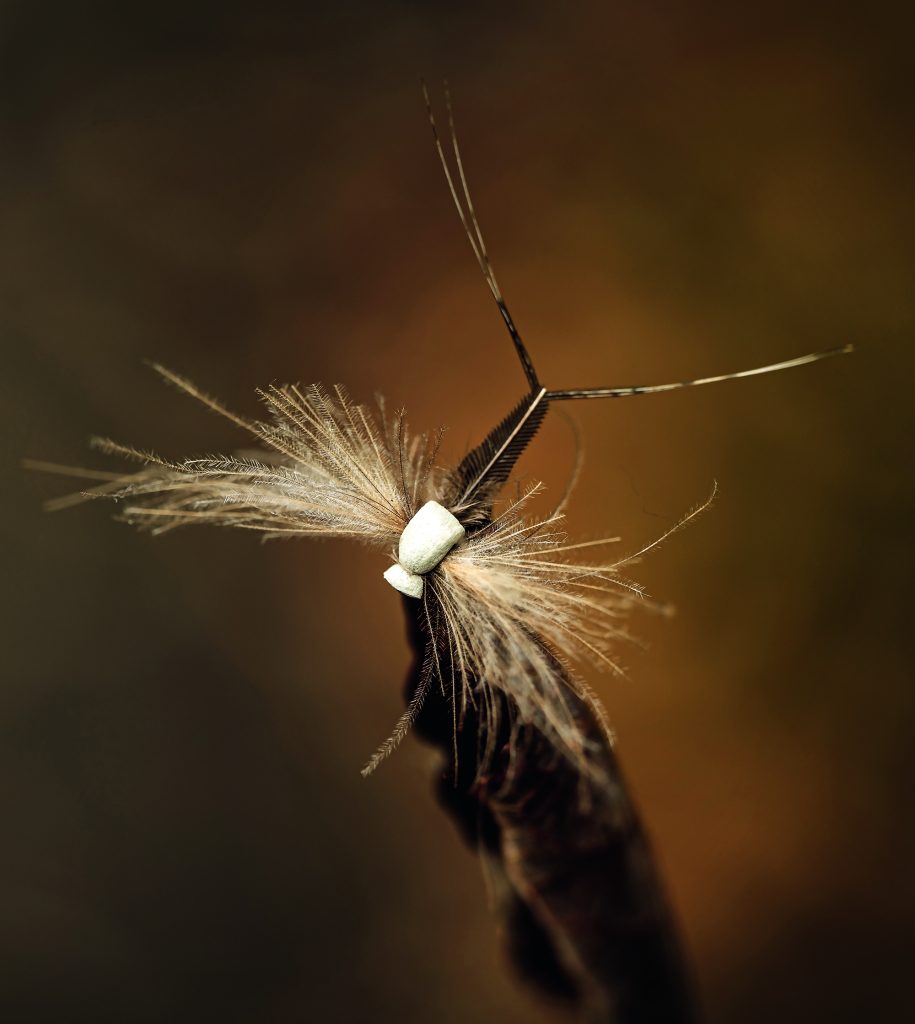
Dry fly fishing in Denmark is not quite as gloomy an experience as some rumours make it out to be. There are both beautiful trout and fine streams to be found out there for the seeking fly fisherman. Stuff some simple and effective CDC flies into the box and get ready to extend your season with the fly rod.
By Peter Lyngby
(this artickle has been published in the danish magazine “Sportsfiskeren”)
When Daniel D. Holm finally cracked the code to catching Danish salmon, he was certain the flies deserved part of the credit. A series of experiments and diligent test fishing have been distilled into three seasonal variations of the same basic design. Join Daniel as he shares a simple recipe for salmon success.
By Peter Lyngby
(this artickle has been published in the danish magazine “Sportsfiskeren”)
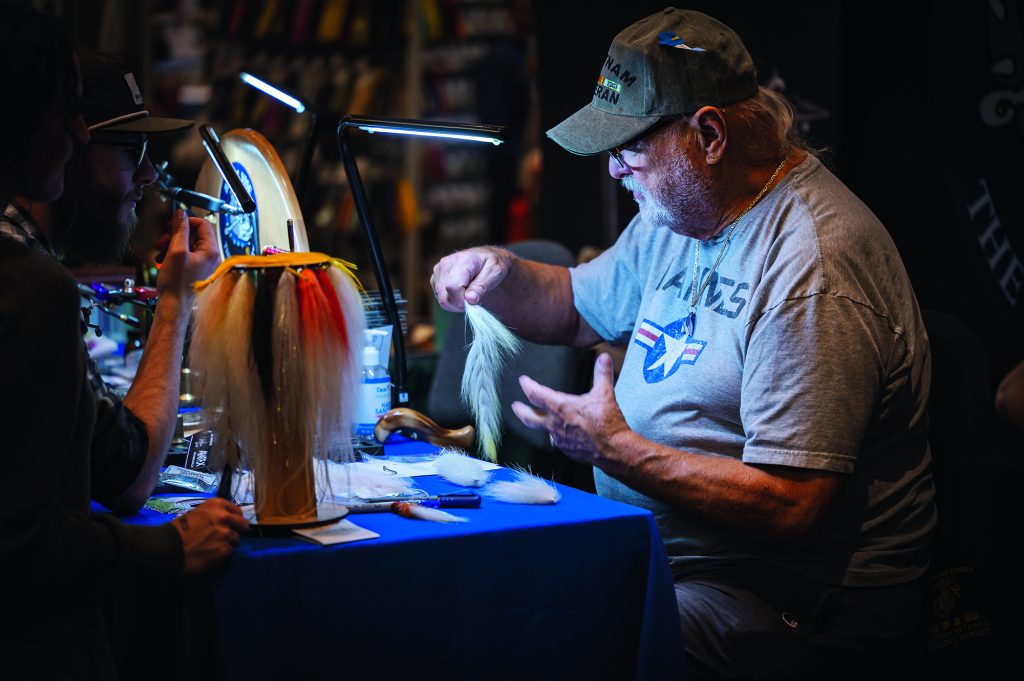
For many years, bucktail – deer tail hair – was a fairly inexpensive and easy-to-find material. Recently, however, it has become both costly and difficult to source. The reason is simple: demand has surged, especially among tiers who create flies for predator and saltwater fishing. As so often happens, much of the inspiration comes from the United States and the popular coastal fishing found there. In the pursuit of large, powerful predatory fish, fly tiers developed patterns that rely heavily on bucktail. Its properties and length have made it extremely popular, allowing tiers to create large flies that are still relatively light and move beautifully in the water. Even very large flies—such as Bob Popovics’ famous “Beast Fleye,” which can be tied up to 20–30 cm—remain castable with a fly rod.
Bucktail-legend Bob Popovich showing one of his Beastflies.
The design and styling of salmon flies have changed significantly over the years. Initially, these flies were made exclusively from feathers and silk, but today they often incorporate various hair materials. Over time, the choice of hair has also evolved. Early hair-wing salmon flies were tied primarily with deer hair, squirrel, and calf tail—all fairly stiff materials. In the 1980s and 1990s, however, Scandinavian fly tiers began favoring softer materials like fox tail and raccoon dog. It was during this period that tying salmon flies on tubes became the norm.
At Ahrex Hooks, fly fishing has always been about more than products. It’s the time spent by the water, the quiet moments before a take, the creativity at the vise, and the simple joy of fishing a fly you tied yourself.
That passion is the foundation of our new concept: From Vise to Water.
It’s our way of taking the craft from the tying desk all the way to the rivers that inspires what we do — turning ideas into experiences, and patterns into memories.
As the coastal waters cool down, shrimp once again move closer to the shore. Morten Jensen often explores unconventional coastal spots with calm, clear waters, where his favorite fly, the Agne Shrimp, frequently tricks the elusive autumn sea trout.
By Peter Lyngby
(this artickle has been published in the danish magazine “Sportsfiskeren” and the online magazine “In The Loop Magazine”)
Among the most classic salmon flies and patterns that most fly fishers recognize, even if they don’t fish for salmon, are Jock Scott and Green Highlander. However, many are also familiar with names like Black Doctor, Silver Doctor, Blue Doctor, Durham Ranger, and Thunder & Lightning. What many don’t know is that all these latter patterns were created by the same person.