
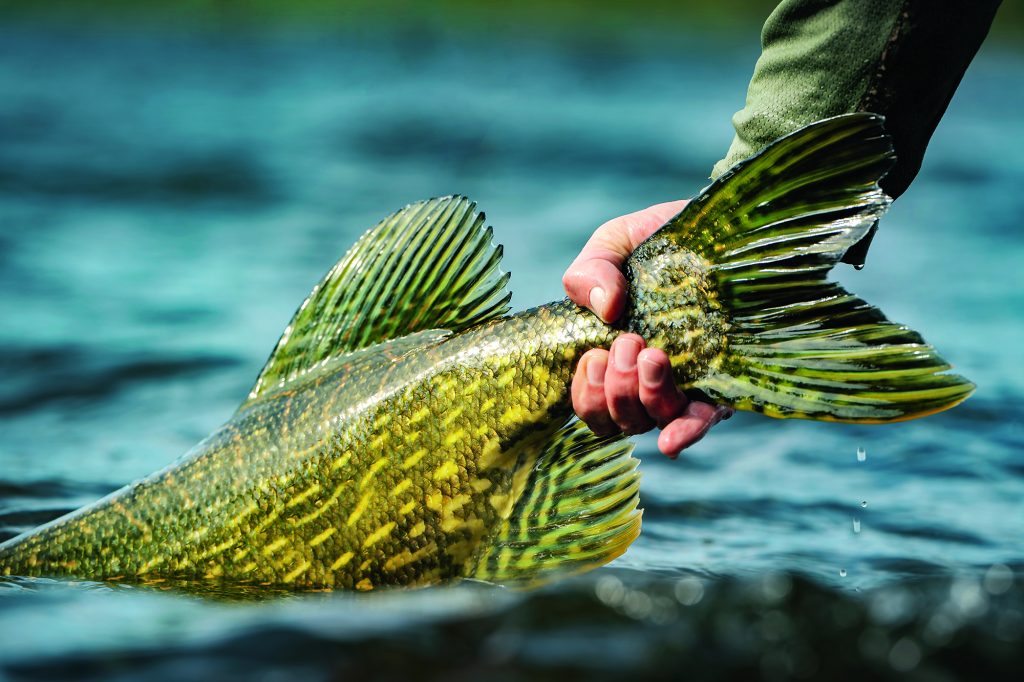
For many years, bucktail – deer tail hair – was a fairly inexpensive and easy-to-find material. Recently, however, it has become both costly and difficult to source. The reason is simple: demand has surged, especially among tiers who create flies for predator and saltwater fishing. As so often happens, much of the inspiration comes from the United States and the popular coastal fishing found there. In the pursuit of large, powerful predatory fish, fly tiers developed patterns that rely heavily on bucktail. Its properties and length have made it extremely popular, allowing tiers to create large flies that are still relatively light and move beautifully in the water. Even very large flies—such as Bob Popovics’ famous “Beast Fleye,” which can be tied up to 20–30 cm—remain castable with a fly rod.
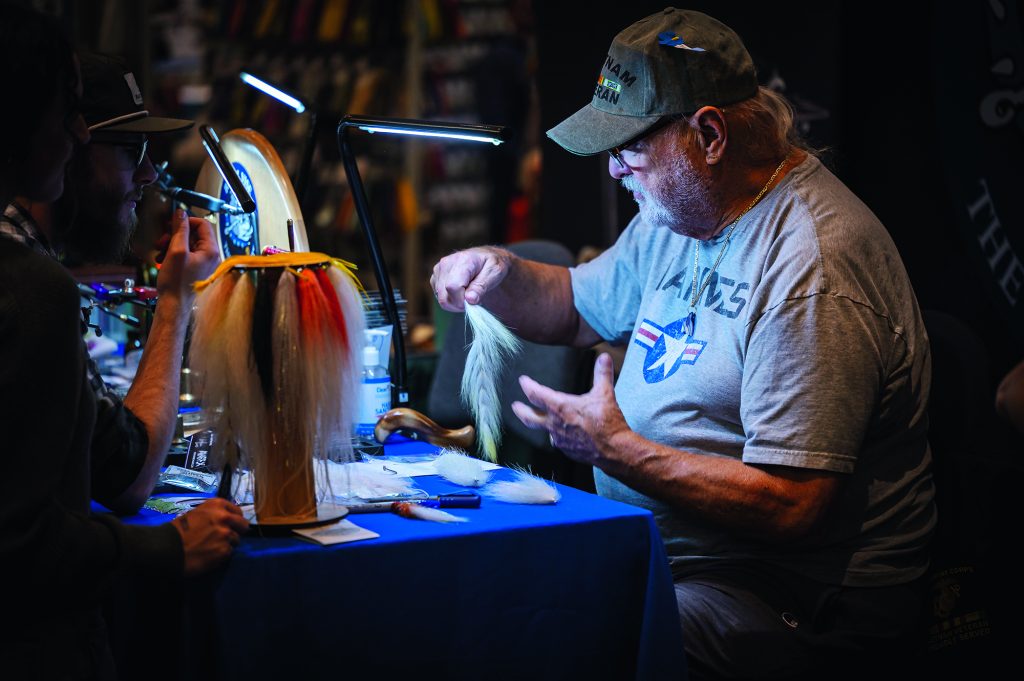
Bucktail-legend Bob Popovich showing one of his Beastflies.
On this side of the Atlantic, bucktail has become increasingly interesting for pike fly anglers. The challenge, however, is finding hair of high enough quality. Most of the very best bucktail remains in the U.S., which is also the main supplier. The deer tail is essentially a by-product of hunting the American white-tailed deer, where the primary interest is the meat and hide. While the species does exist in some European countries—Finland, for instance—it isn’t hunted to the same extent, which leaves us dependent on American supply.
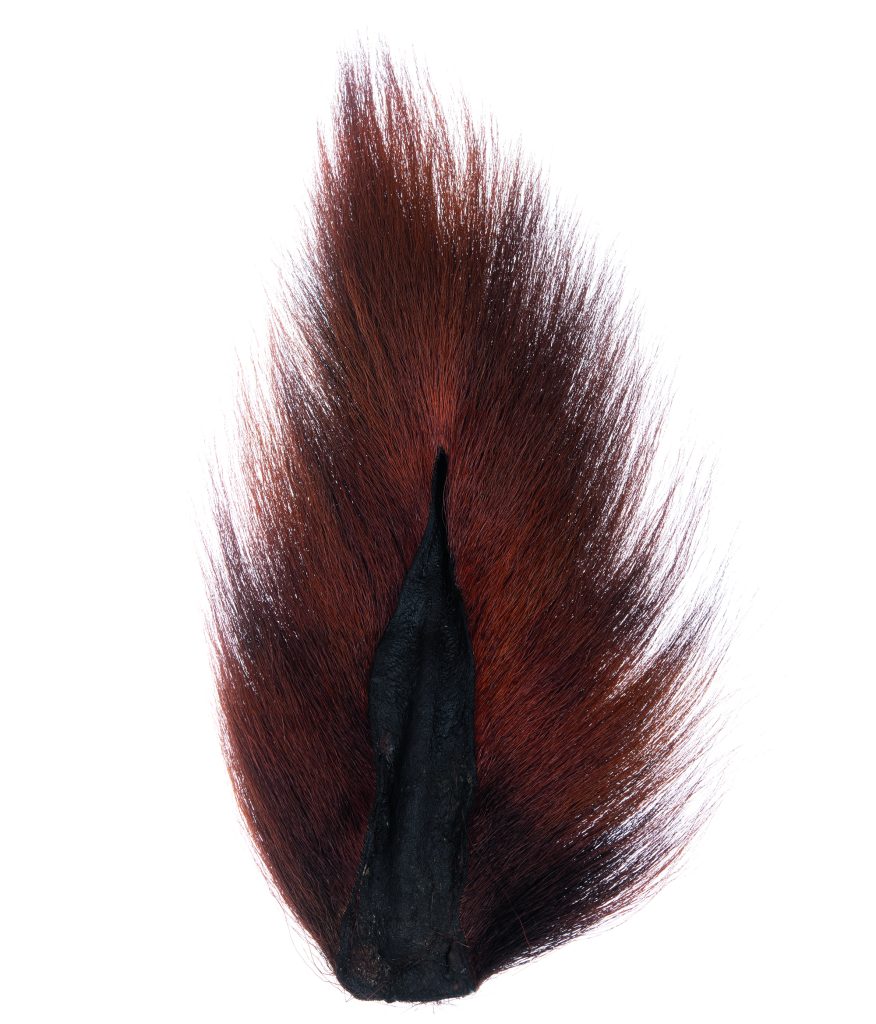
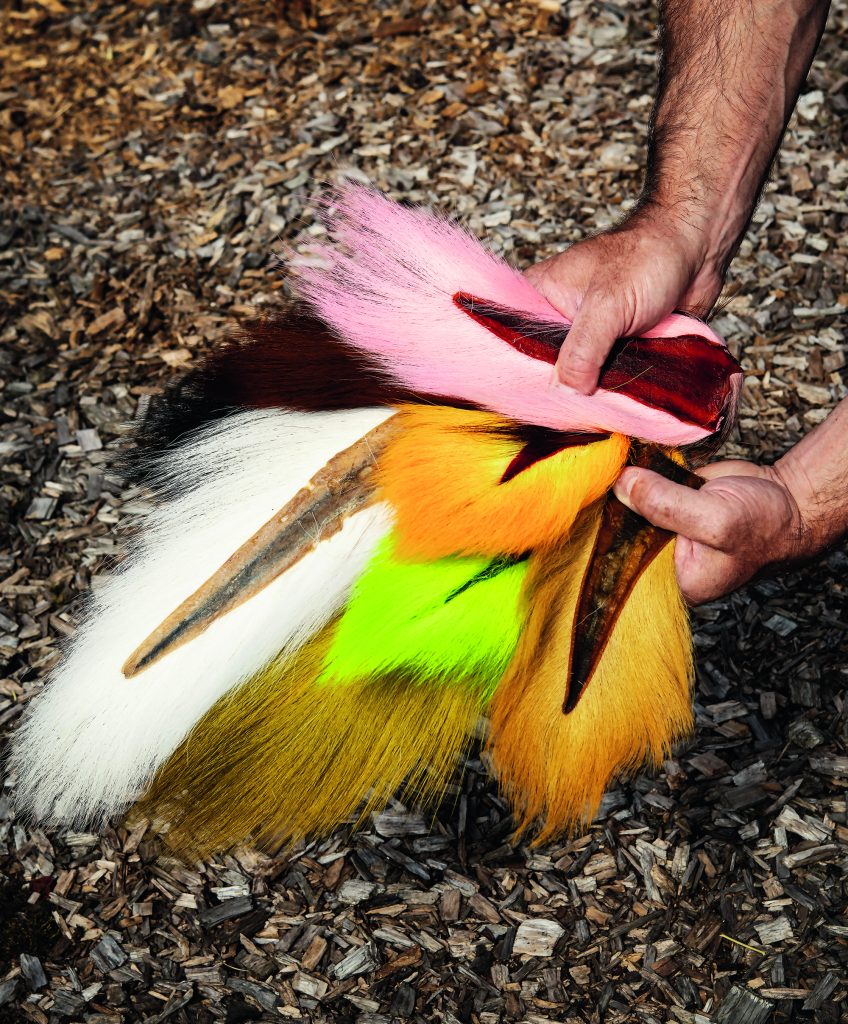
When you do come across bucktail, it’s worth taking the time to examine the tails closely. The largest tails do not necessarily have the longest hair. It’s also important to have tails in several different lengths, since the hair must match the size of the fly you’re tying. You can’t simply use very long hair and cut it short—the structure and natural taper of the fibers won’t behave correctly in the water if trimmed too much.
The fly in this article, the Hollow Sik, was created by skilled fly tier and pike angler Morten Valeus. It imitates white fish and other silvery baitfish, but the pattern should be seen as a template that can be adjusted in color and size to suit different prey and fishing conditions. Its name comes from the “Hollow” technique, in which bundles of bucktail are tied around the shank—or tube—with the tips pointing forward. The hair is then pushed backward, and a small thread dam is built in front of it, forming a flared collar around the hook. The easiest way to do this is with a small tube or empty pen barrel, which pushes the hair evenly around the shank. Once the fly is wet, the bucktail bends backward and envelops the hook, creating the illusion of a baitfish shape. This technique also allows the hair to move more naturally during the retrieve compared to tying the hair in as a rear-facing collar.
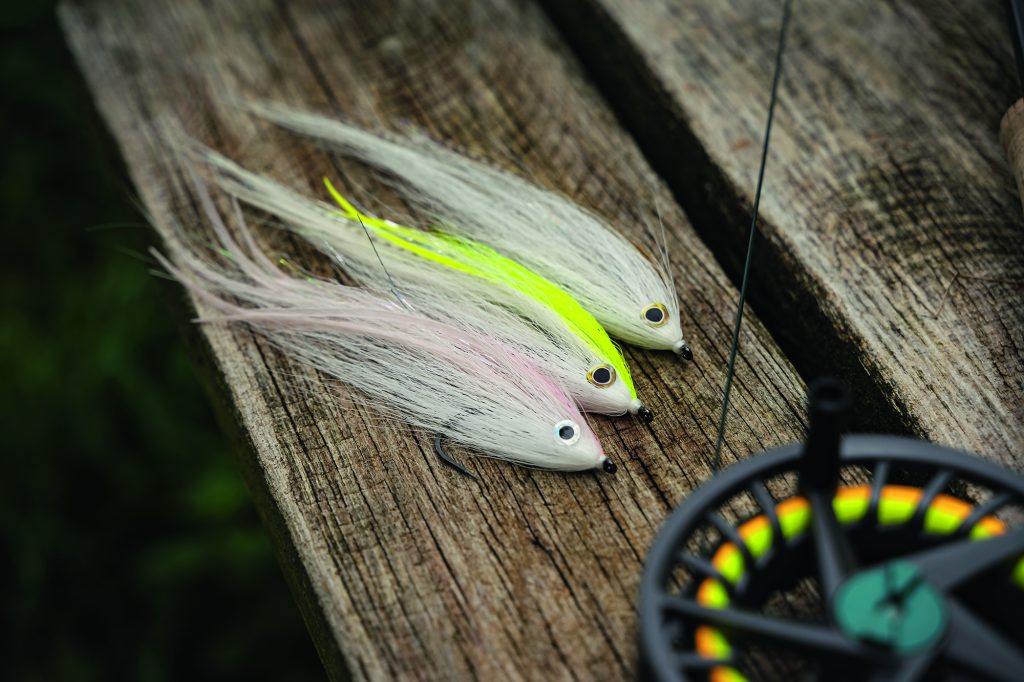
The process is repeated until the hook shank is filled, and the fly reaches the desired size. Narrow saddle hackle feathers and a touch of flash are added to increase the fly’s realism and fishability.
The fly can be tied on many types of hooks, but a slightly heavier model is preferred to help it track properly in the water. As with all fly tying, practice makes perfect. And if your finished fly looks wild and messy, don’t worry—just run it under the tap or soak it briefly. Once the hair is fully wet, let the fly dry with the head pointing up. The bucktail will settle and shape itself into a much more fish-like profile.
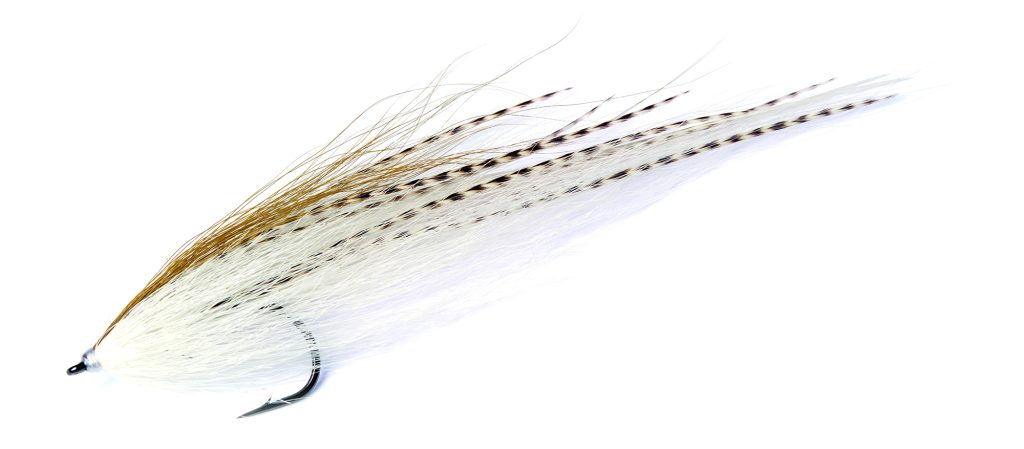
Hollow Sik – Tying Recipe
Hook: Ahrex TP612, size 4/0
Thread: White 140D or similar
Tail: White bucktail and grizzly saddle hackle
Section 2: White bucktail, white and grizzly saddle hackle
Section 3: White bucktail
Section 4: White bucktail and grizzly saddle hackle
Section 5: White bucktail and grizzly saddle hackle
Back: Olive bucktail
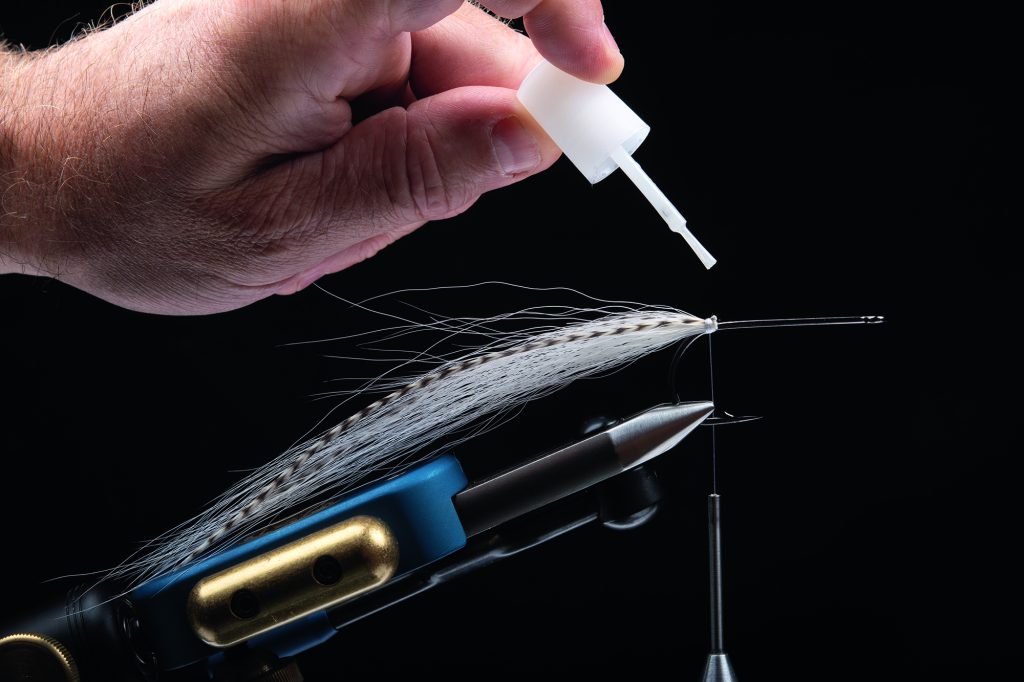
Start the thread on the hook and add a drop of super glue. Tie in a small bundle of bucktail in the usual way. Add two grizzly hackle feathers on top.
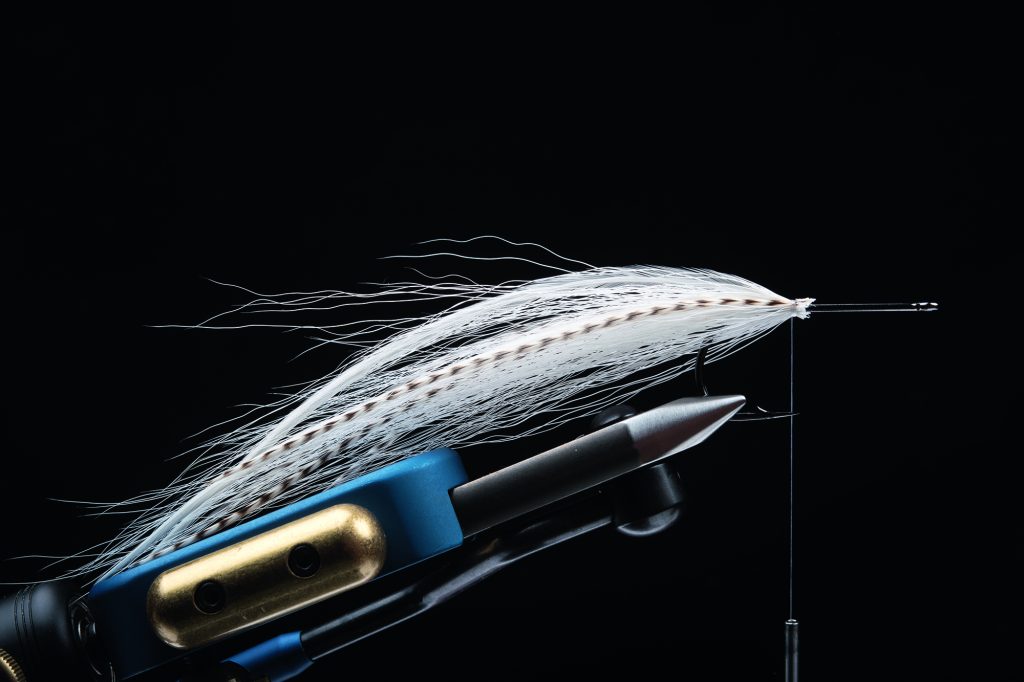
Tie in another bundle of white bucktail, spreading the fibers evenly around the shank. Add two white saddle hackles reaching the tip of the tail. Then tie in two additional grizzly hackles along the back.
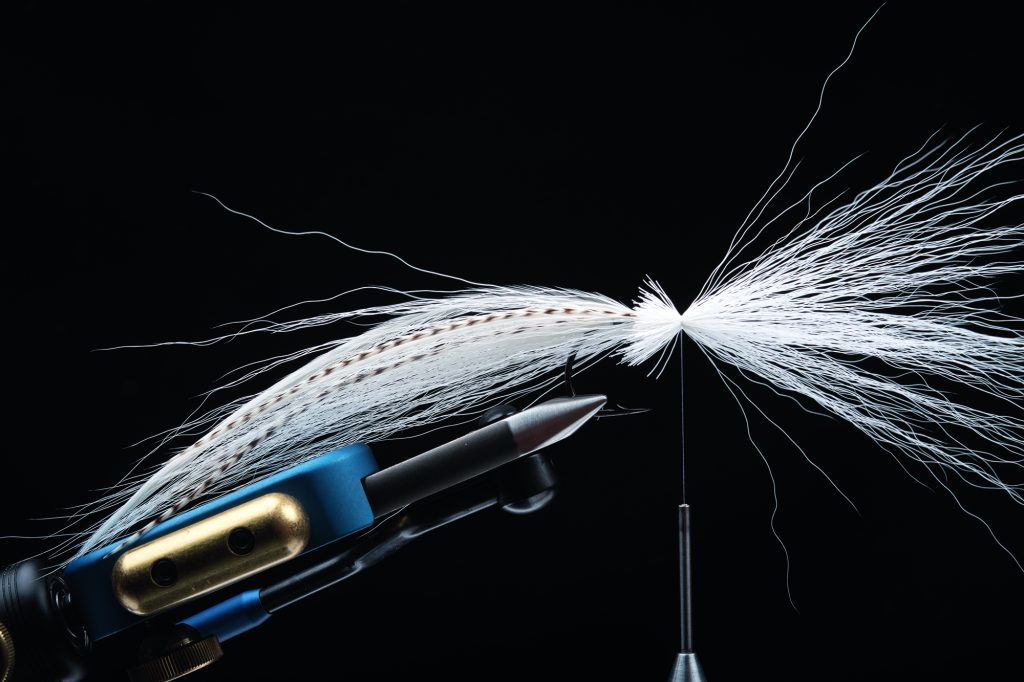
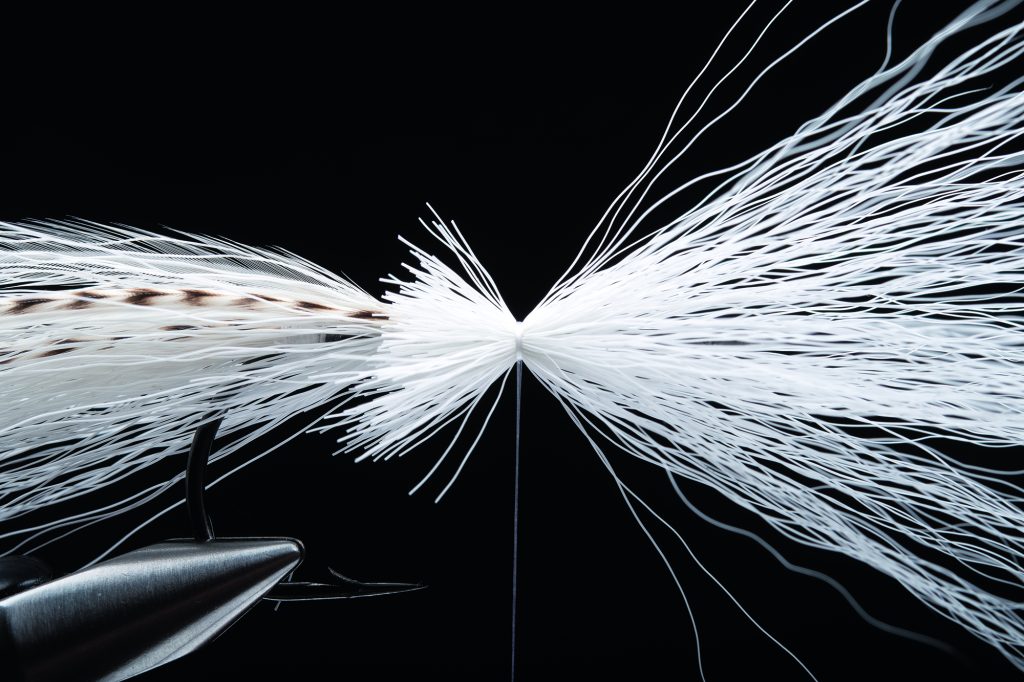
Tie in a bundle of bucktail with the tips pointing forward. Spread the hair around the shank and secure it. You can trim the butts close or leave them if you want a bit more bulk.
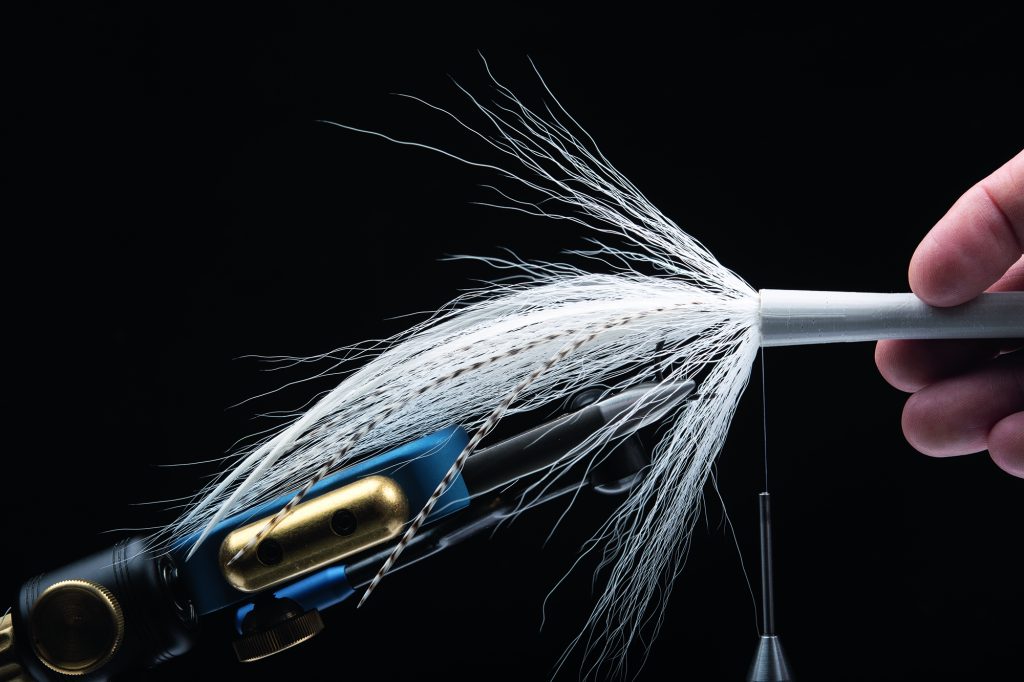
Use a tube or empty pen to push all the bucktail backward.
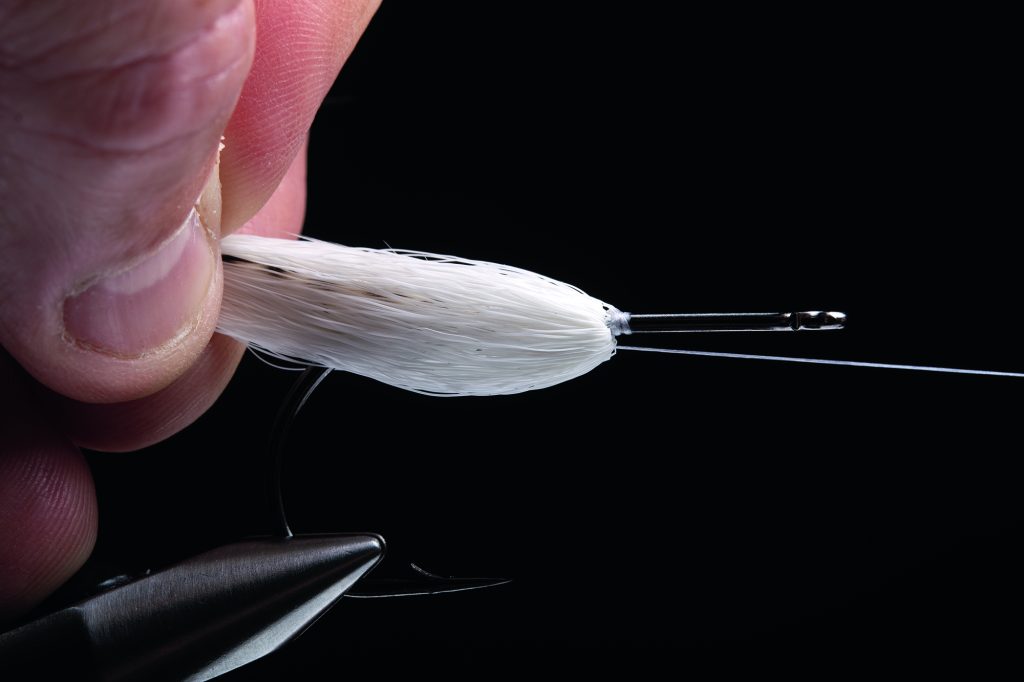
Pinch the hair in place with your fingers and carefully wrap through it with the thread, ensuring no fibers get trapped.
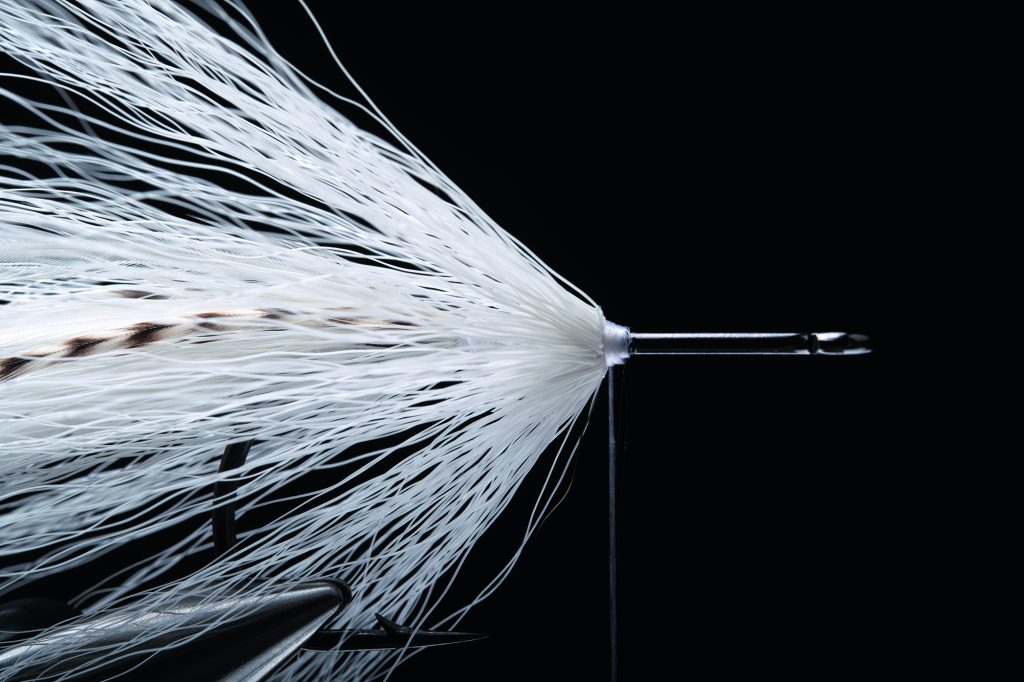
This step is crucial to the fly’s final shape: build a thread dam in front of the bucktail. How much the hair flares depend on the size of this dam.
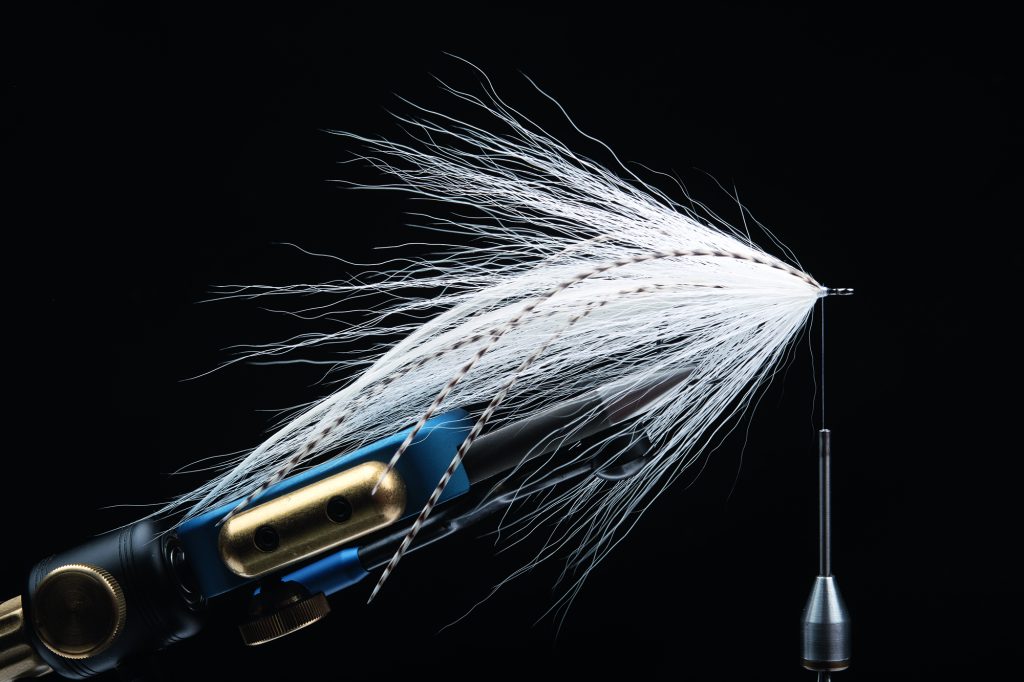
Repeat steps 03–06 and add two grizzly hackles on top of each section. Make each section slightly shorter than the previous one.
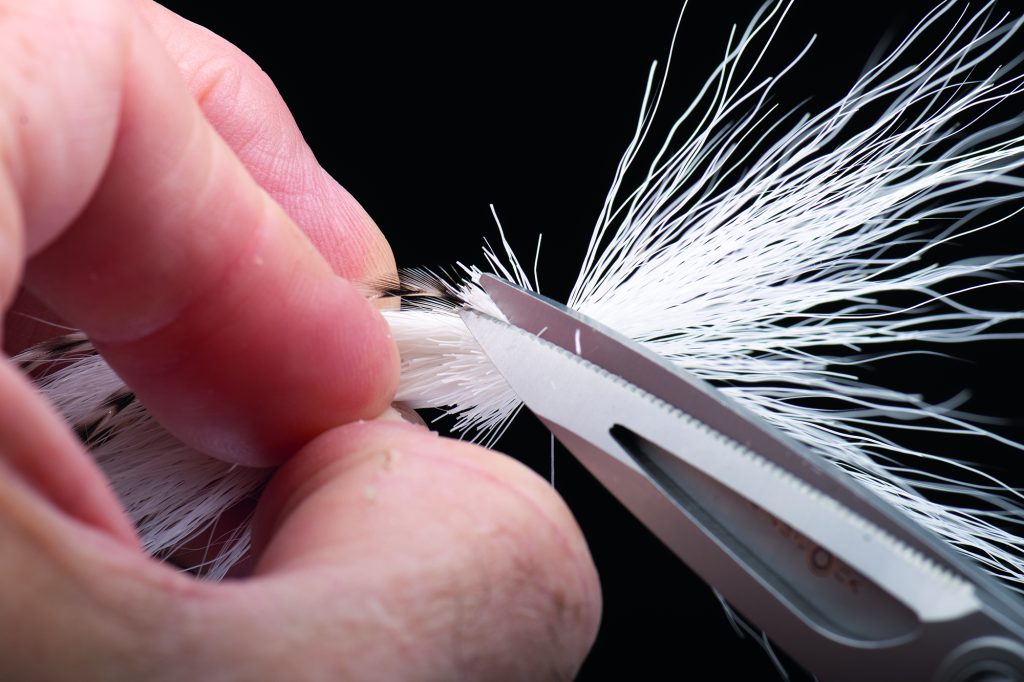
For the following bundles, trim the butt ends so they don’t push the previous section downward.
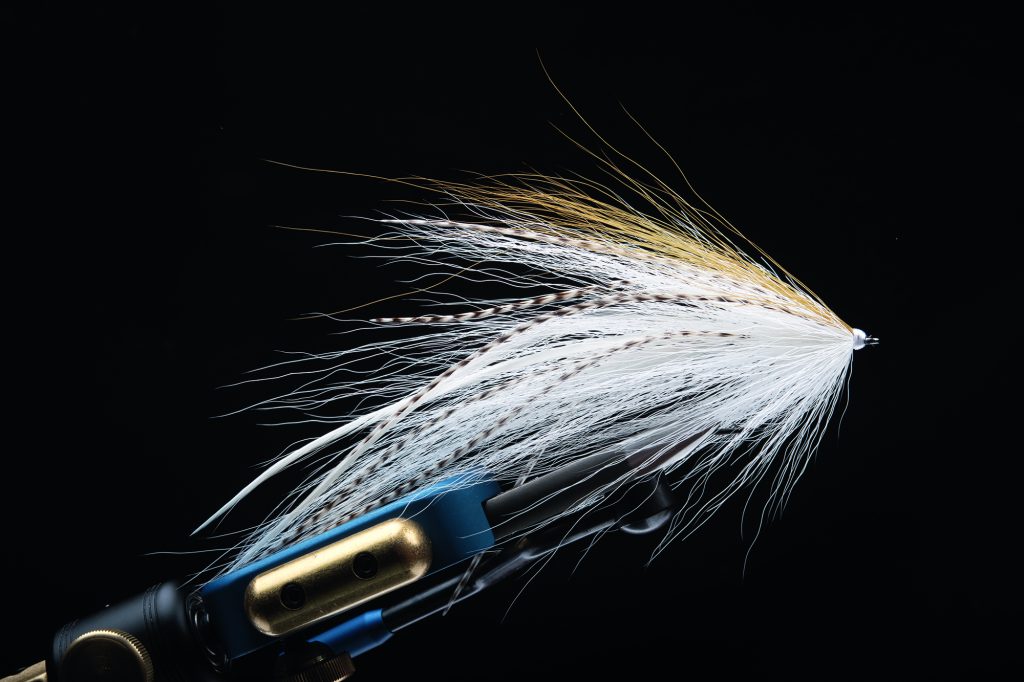
Finally, tie in a slimmer bundle of olive bucktail to form the fly’s back. Clean up, build a neat head with the thread, cure it with UV resin—and the fly is complete.
You can also watch Morten Valeur tying his Hollow Helt here: