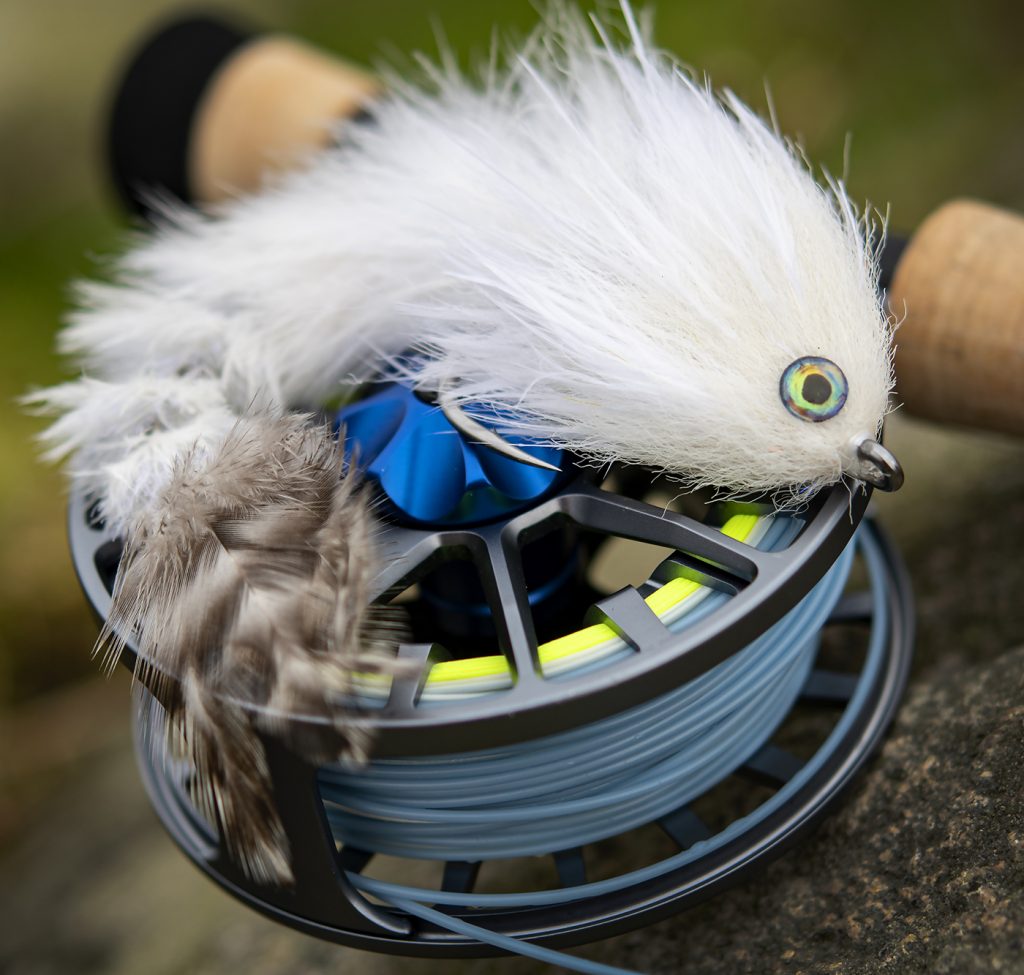
Game Changers are a relatively new style of flies, tied on a number of shorter or longer shanks, connected together with small eyes. The shanks themselves come from just a centimetre in length and upwards. Linked together like a chain, the style and technique is excellent for tying big flies, long flies and even smaller flies with plenty of built in mobility.
The fly on the blog today features two legends in one. We maybe close to Christmas and far away from the trout fisher’s high season – the Danica-hatch, but it’s never too late to prepare, and probably never too early either. And if it goes as it usually does, Danica-season will be upon before we know it, so here’s a little inspiration to look at.
There are flies that are invariably associated with specific waters or places. Often, of course, those for which a specific fly might have been created. A clear example of this is a fly called Chillimps. A simple, orange palmer hackled wet fly for salmon.
The importance of a certain food item for trout and grayling and other species can be ascertained in several ways. You can get on the water with a seine and check what’s available to the fish, but you can also have a look at the number of imitations of a certain insect or other prey.
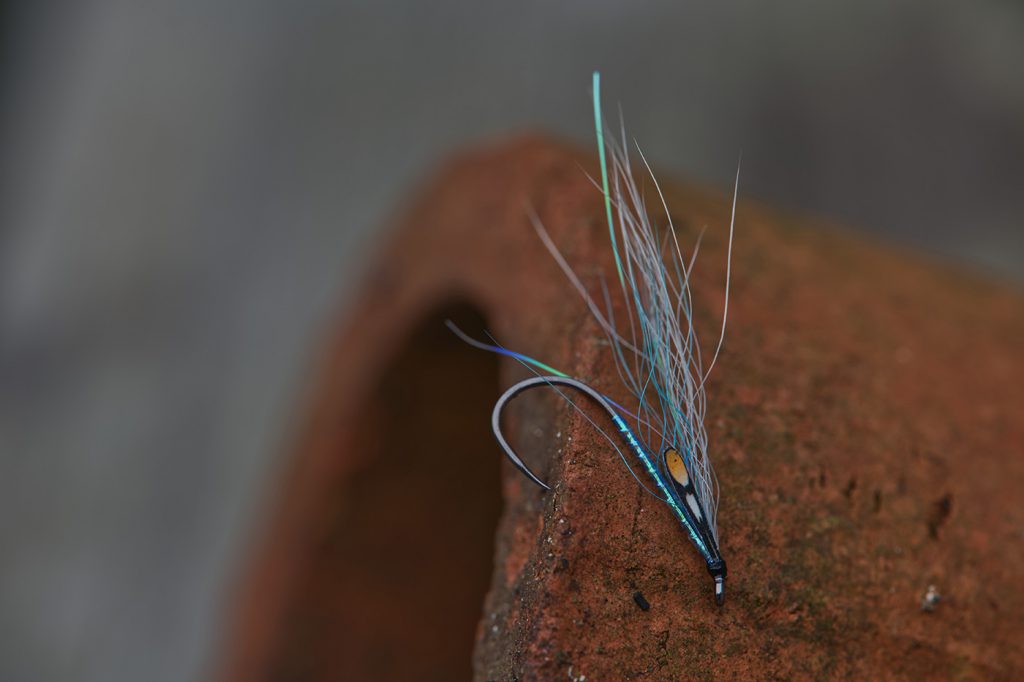
HP Glass Minnow is another simple, inconspicuous fly, originated by Danish fly tyer, Henrik Strandgaard. Henrik is best know for classic salmon flies, but is behind this pattern, which also does very well on calm days and in clear water. Body of pearl tinsel, wing of blue and natural polar bear, kept sparse and eyes of ProSportfisher Gen3 synthetic jungle cock.
It sounds a bit like a new direction in modern, Scandinavian cuisine, but it’s not. It’s a new hook in our Nordic Series. Do they ever stop releasing new hook, you might think. Well, not in any foreseeable future. Nordic Series was the first line of hooks we released, so named to mark that we are a Danish hooks brand. Most of the hooks are intended and designed for saltwater fishing in Scandinavia, but most of them are very versatile and will fit a number of flies for all sorts of fishing.
‘I have always enjoyed the fall season on the coast. I particularly like the fall season, because the fish are always in good condition after feasting their way through spring and summer.’
Andreas Larsson has written this week’s blog for us – a few tips for fall fishing along the coast and a beautiful zonker fly for the season.
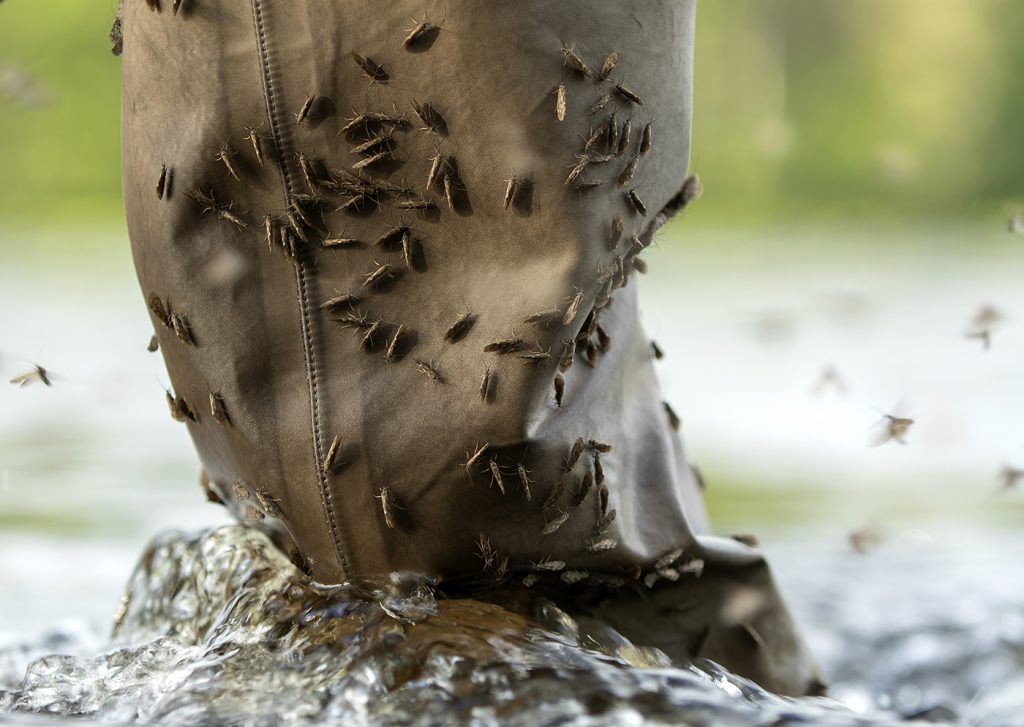
Like may fly nymphs and the nymphal- or larvae stage of any insect, the adult part of the life cycle is the shortest. The large mayflies can live for days, the smallest perhaps only for a hours. Caddis are generally the same – the larger species can live for several days, the smaller just a few days. After mating and egg laying they both die and become spent spinners – a stage off the life cycle the fish know well, since they are easy prey, unable to escape.
The dry fly season coming to an end. But it’s certainly not over and the fishing can still be quite good. There are still insects on the surface – some that come from below and even some that come from above. An important food item for trout and grayling during the fall is sedges – or caddis.
Our friends at Hökensås Sportsfiske have been organising their popular Trout Safari events for a long time, and they usually sell out very quickly. In the last weekend of October, we have partnered with Hökensås til to put on a Trout Safari together.
Most fly fishers know the style of flies called Matukas. They are a style – originated in New Zealand; a matuka is not a fixed pattern. In fact, their proper name shouldn’t even be matuka, but rather matuku. Matuku is the Maori name for the bittern, and it was the bittern’s feathers that were used for the first matukas (I’ll from here continue using the now common name).