From all of us at Ahrex, we wish everyone of you a very Merry Christmas and Happy Holidays!

From all of us at Ahrex, we wish everyone of you a very Merry Christmas and Happy Holidays!

Most flyfishers slow down a little during the winter season, even though there is fishing as long as there is open water. Slowing down for a flyfisher doesn’t necessarily mean that fishing as such is on hold until next season. No, personally I like to spend some evenings maintaining my tackle. Salmon rods, lines and reels won’t see you until next spring, so I make sure everything is in order, rods checked, lines cleaned, reels lubricated, backing checked if you’ve been lucky enough to have use for it. The same goes for the dry fly tackle and an important part of this process is also checking flies. It’s just a nice feeling to unpack the gear again months after, knowing it’s ready to go.

As the water continues to cool down, an age old debate tends to heat up. In southern Scandinavia we’re blessed with many flyfishing opportunities all year round. The first factor is of course that fishing is allowed and the next that waters are ice free, but if both are the case the flyfisher has many choices. Fishing for sea run brown trout – in the sea – is as close to a “national fishery” as you’ll ever get in Denmark, but also pike fishing in the lakes (and some river systems) is open during winter and with that also perch fishing.

Dry flies have one thing in common – they all float. Some float because they are tied of buoyant materials (foam hoppers for instance), some depend on chemical help in the form of a silicone floatant and some are designed to partially float (emergers and of course the legendary Klinkhamer Special). And finally, some are tied so they rest on the surface film as a result of their dressing.

At least we can say with certainty that they’re not fake news, but we do have some hooks that have been added to our current line-up, and they’ve slipped under the radar, so we thought it best to point them out here on the blog.

We are well on the way to having what we consider a full line of hooks (although we’re probably not done yet). We have most species covered and we believe we have a broad selection of both general and specialist hook designs. Dry flies, wet flies, saltwater flies (both cold and tropical saltwater), pike, salmon, tubeflies, streamers – what ever your mojo, we’ve got you covered.

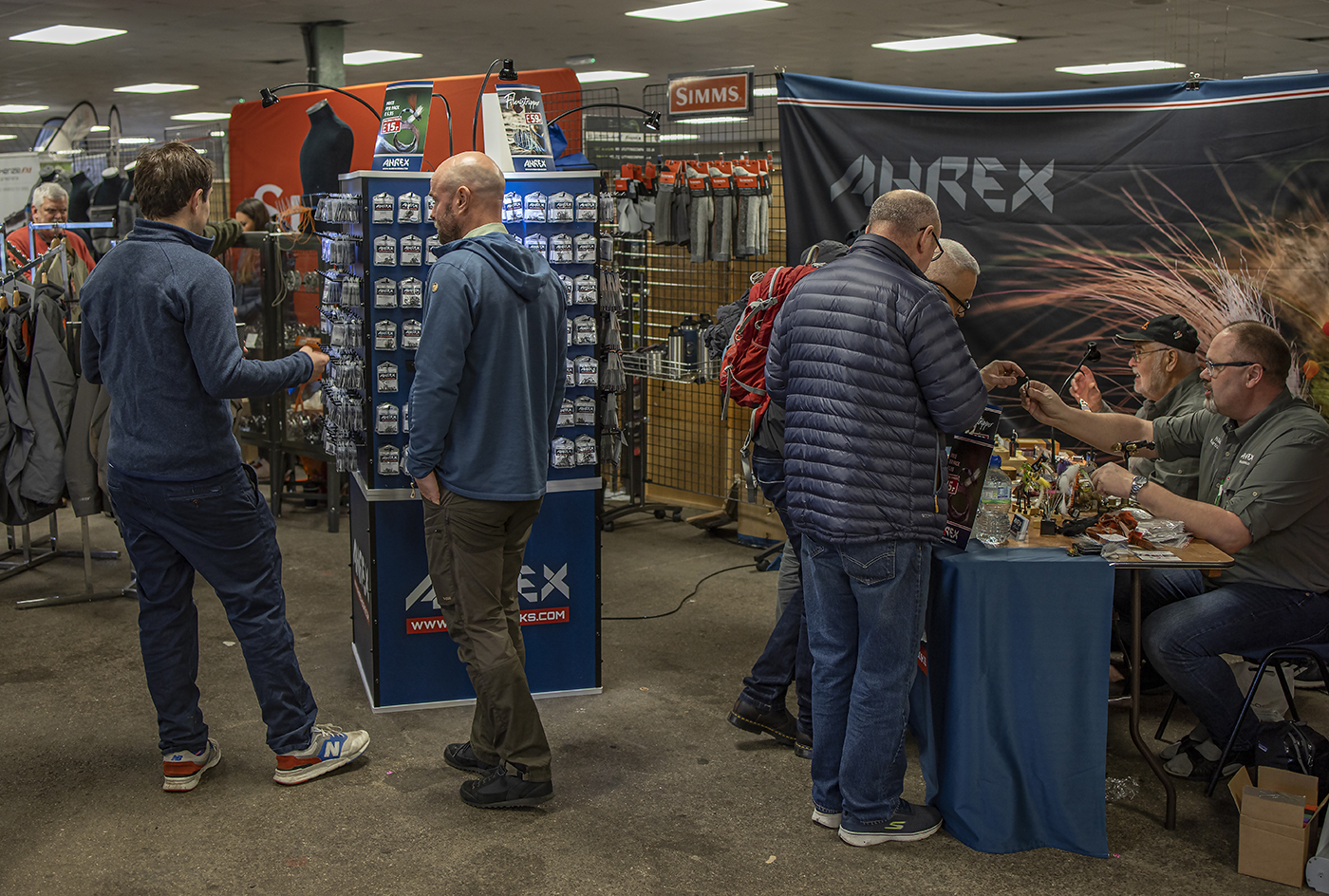
The 10th anniversary version of the Irish Fly Fair is over. The venue was the beautiful Galway Hotel with a great view of the coastline and there was everything a flyfisher (or spinfsher for that matter) could ever wish for.


On September 23rd we released our new Salt-series hooks as “the last child of the Ahrex family”. Well, as far as hooks go that was true, but the proper term would have been “the latest child”. Because today we release, well – I better say, another child.

Stefan “WickedTrout” Larson and Andreas Andersson had been fishing Montana for a couple of weeks before they picked up us in the airport, just as the first snow of the winter fell. We took the scenic route over the Rocky Mountains to Delta, where we fished for a few days in the magnificent Gunnison River, before we headed to Denver for the IFTD show.

Jigs are interesting flies and very popular in some parts of world, and the French have developed an entire style of fly fishing, called French nymphing, which revolves around small, heavily weighted flies – often tied on jig hooks. The Spanish competition teams had great succes with their style of jigs called Perdigon flies, which I think originally were tied on normal hooks, but now often are tied on jig hooks.